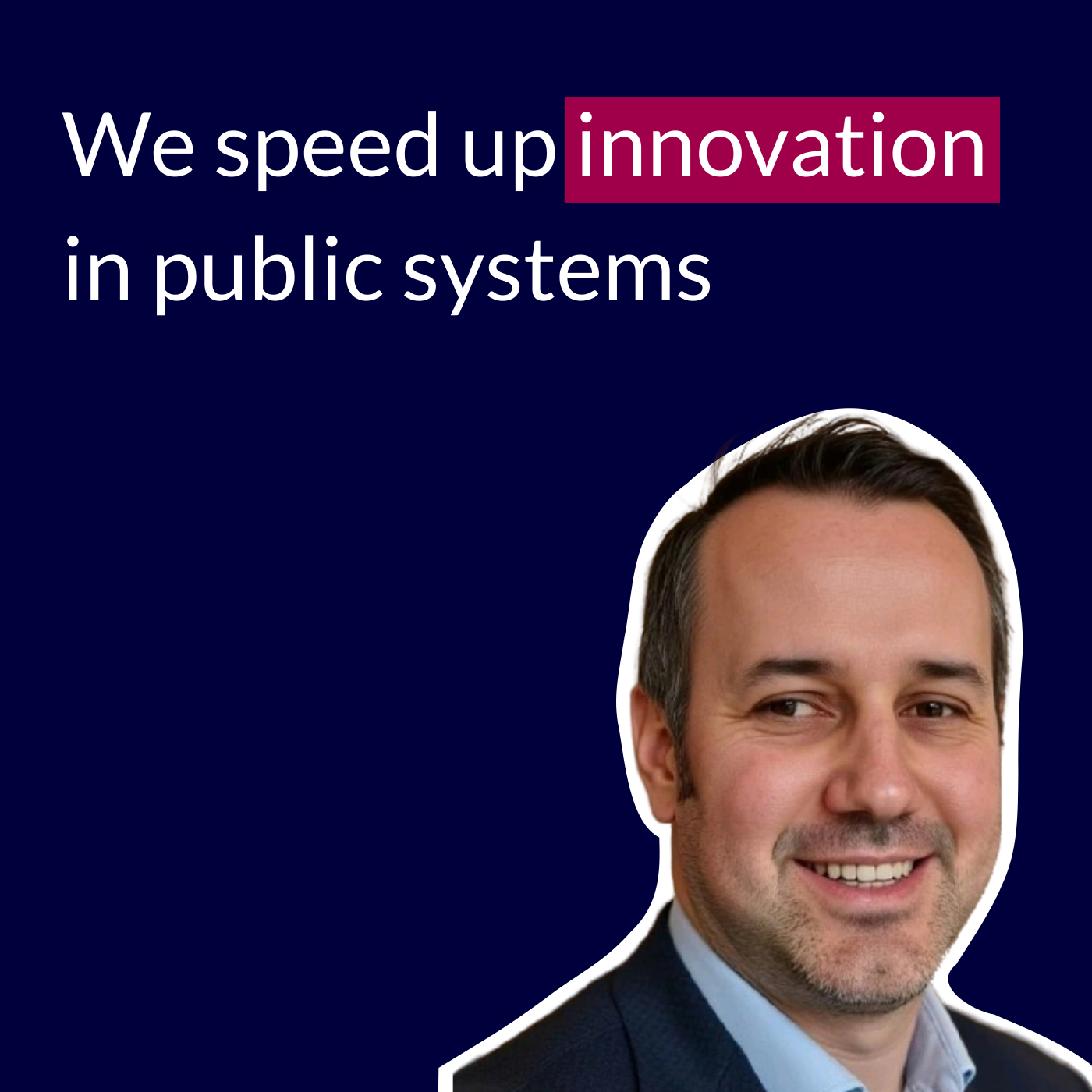
Marcello Coppa on the Feel Community, the Govtech Forum and accelerating innovation
Democracy Innovators | 2026-03-24 | 49:26
Marcello Coppa has a background in economics and communications. He has 15 years’ experience in innovation management and consultancy. As the CEO of the Feel Community and curator of the GoVTech Forum, he is working to accelerate innovation in public systems.
If you enjoy our podcast, please consider making a donation. It really helps us to sustain the podcast.
Top Keywords
- public 0.018
- public system 0.013
- innovation 0.012
- public administration 0.012
- govtech 0.009
- administration 0.009
- different 0.006
- citizens 0.005
- cannot 0.005
- services 0.005
- system 0.005
- certain 0.004
Transcript
Speaker 0
0:00 – 0:07
Welcome to another episode of the Democracy Innovator podcast, and our guest of today is Marcia Loprop. So thank you for your time and for being here.
Speaker 1
0:08 – 0:11
Thank you, Alessandro. Thank you for hosting.
Speaker 0
0:12 – 0:24
And, as a as a first question, I'd like to ask you what is, field? And, also, what is the GovTech forum you're working on?
Speaker 1
0:25 – 16:29
Sure. I'm very happy to, to answer. Phil is, is an accelerator for innovation, in the public system. So, basically, we try to speed up, the adoption of, innovation in in the context of public policies. That's our goal. That's our mission. Phil is a benefit company that, has, three main areas of activity. The first one is, think tank. So we produce knowledge and we act as a as a platform, as a community, to gather, people that, deal with innovation in the public system. And, the GovTech forum is one of the main activities in this, in this, line of business or field, and I'm going to tell you more about the GovTech Forum in a while. The second area is that of, advisory. So we do advisory services both for companies and for, public administration institutions, and NGOs that, want to push the envelope for for innovation in the public system. And the third one is capacity building. So we, keep, the service servants in particular, but also companies with the with the knowledge, with the competencies, with the skills, that are needed to, understand what's going on in terms of innovation and to adopt innovation, wisely and effectively, in the context of of of the public system. I keep on saying the public system because that's the definition that we provide of, what has to do with public interest, which is not only dealing with, strictly speaking public administration governments, but in general, with, all the policies and all the decisions that typically are made by public decision makers, whether elected or or not in the different, government and state bodies. But, it has also a lot to do with, companies, with corporations, whether they are in regulated markets or in deregulated markets, that, anyhow deal with, services of public interest. And, if we think about different sectors such as health or energy or telco, or mobility, We may find in different geographies, in different space, and in different time, companies and operators that have been public, that have been privatized, or have been heavily regulated anyhow. So, we talk about the public system, in order to avoid all of this, confusion and to and to focus on what really matters, which is, the policies that impact on citizen's life, on people's life. So this is the definition that we give. And and Phil, deals with, with, innovation in this context. The GovTech forum is the main activity that we, organize in, in in our think tank together with other studies and research that we publish. And, it's it's a gathering, or better. It's it's a platform. And the most important part of this platform is the gathering. It's, it's the forum itself, which is a two day, event, which take takes place, every spring in, in Milan. Until now, it it's, it has taken place in Milan, and the upcoming edition is going to be on the eighteenth on the nineteenth and the March 20, so, in a in in a while. And, it gathers the civil servants and the elected officials and managers of companies and government owned companies and different type of innovators that work within and around the public system, to to to to do innovation in this context. We, focus on technological innovation and GovTech. GovTech, is, is a concept that that that has been defined by the World Bank. We are partner of, a working group of of the World Bank, which is called Public Sector Innovation in GovTech program. And, therefore, we adopt the the definition of GovTech given by by the World Bank, which is basically a whole of government approach to the public administration reform and to the improvement of the impact, not only of the efficiency of public administration, in the different areas of public policy. And this is a very important, aspect that, I will underline, in a while, with the citizens at the center, with the citizens at the at the heart of reform. So in order to make, government, activity, better in terms of, efficiency, but in particular, in terms of effectiveness. So data driven decision making, more transparency, and more citizen engagement, with seamless, digitalized public services. So this is GovTech in in an essence. But the important thing is that we, see GovTech as, as an enabling, policy, which is, basically cross cutting all the different, policy areas that, governments are dealing with. And therefore, during the forum, we have, different verticals, which we dive into. So for example, this year, in in in the forum, we will focus on, various, vertical, vertical sectors of policy. One of them is, the housing crisis in the European Union. And therefore, we will see, we will look at this policy area with the perspective of GovTech. So trying to, understand how technology in this case, and innovation can provide a contribution to try and solve the housing crisis. Throughout the the whole cycle of trying to, solve this issue, which is, urban planning, which is, design and, and the definition of of, projects, which is building and maintenance and but also, assignment and, and management of, of the use of, of housing. For example, if we are talking about pub public housing, but it's also about how we finance, all of this. This is just one of the topic. Another, another topic, for example, is related to, the impact of climate change on the food chain and, how we make sure that we, have a resilient food chain, to make, the Mediterranean area, stable and resilient, in this perspective. And technology has a lot to do with this because we, we deal with, understanding what is the impact of climate change and trying to mitigate, trying to adapt, and, and to monitor, everything that is going on in terms of monitoring, the, the, the environment in which, the food chain is operating, but also, technological solutions that can help in, having better, crop management, reducing waste, and so on and so forth, a better distribution, and so on and so forth. So it's public interest technology indeed, the the topic that we deal with. These are just two of the topics we have much more at the forum. We're talking about artificial intelligence and its adoption, in in the public context. We're talking about, how to foster digital cooperation between Italy and Africa. For example, we're talking about, lots of other things, and, there is an overarching theme every year. This year the overarching theme is new alliances. So we are starting from this, acknowledgement, the fact that, we are dealing in a context where things are radically different from the past and, in particular, what's what's different. The geopolitical context, the relationship that we have with, with the natural ecosystem and the rise of the, machine age and and the artificial intelligence age that we are witnessing, just with the current hype on on generative AI. But indeed, it's a it's a long process, that's, that that that started many, many years ago with, actually more, impactful, automation on, on manufacturing processes, before, disrupting the the job of the white collars, as we are seeing today. Well, all of this context, deserves, first of all, a very coordinated and and, and deserves and and requires, to join forces. To join forces of different actors, public, different type of public institutions, different level of coordination among a different level of governance, from, national to local and above international. New alliances are needed in, and, if we only look at the, at the geopolitical context, this is, pretty evident. We we cannot take for granted the, the world order that has been, the the the normal one, the the the one that we took for granted for, for many years, since, I would say, since the end of the of the second World War. And in particular, with the with the creation of the multilateral institutions, in particular, the ones related with globalization of trade. So this is just the tip of the iceberg. But, if we look at every aspect of our life, we need to rethink, the the the networks, that we are playing with and and and the actors that we are dealing with. Think of, energy, think of, food, again, and national security and so on and so forth. So new alliances on the geopolitical aspect, but also new alliances with nature, and, this is a this is a topic that I'm particularly focused on because we, we definitely need to, rethink, the the relationship that we have been, building or let's say destroying with, with, with, the natural services that provide, our own, the conditions for our own existence. And this is particularly critical in particular because natural resources most of the time are, in economic terms, public goods or at least, common pool resources. And if we take this to the global scale and we see about, the failure of, multilateralism in dealing with, decarbonization, for example, because I cannot say it differently, but it's been, it has been failing and and not effective in in reaching its goals. Despite all the effort and on the the hype that we have, around the top, we are not we are not there yet in terms of, cutting down the emission to, to to zero or, even negative, which is, the goal that we have to to pursue if we want to keep the, raise of the temperature, below below two, two Celsius. But, that's that's not the only reason why it is important. It's because it's impacting on our everyday life because what we've been considering, as, low probability, high impact weather events, climatic events are now high probability. And therefore, we we witness every year heat waves on one side or, coastal erosion or floodings, and or or, rain bombs and so on and so forth that we need to we need to to tackle. So, the relationship that we have with nature is, is, fundamental because it it basically, if we destroy that, we can undermine our own our own existence. And and and the third one is, the relationship with, with the machines, with AI. I have to say I'm not that much concerned on that because, I mean, I'm I'm not I'm not, the first one to say this, but, machines have a plug, and therefore, we can always unplug it. And governments have decided throughout history to, to, push or ban or to standardize or to shape as, a part of the economy says to shape, technology, to shape, industries. And therefore, we we have the tools to do it, but it's not only about, industrial policy and, and, economic, intervention of government in in, in, in in the evolution of of, of innovation, which is not always good, I have to say. Most of the time is is not, but it's about the the type of, artificial intelligence, that, we want to build as a community. So I see, governments in this respect as, the, the institutions that, we as, human beings has formed to tackle difficult issues, issues that we cannot tackle as as individuals, and we need to tackle at a community level. So, this is why we need, we need those to think about the relationship between citizens, government, and and machines. Because, I mean, we have changed many things throughout history. We've changed the governance of various type of companies. If you think about banks, they've been there have been years in which they've been national, privatized, or or have had different shapes. So we can do whatever we want basically as as a community. It's it's up to us to decide. And the important thing is that, that's the decision is the result of democratic process and, and the process that is, involving, the community indeed.
Speaker 0
16:30 – 16:43
Yeah. Of course, we live in a in a time where, a lot of things are changing. And in some way, we should also be scary, in some way also be excited, I think.
Speaker 1
16:44 – 16:57
Exactly. And, I I say it's up to us. You know? But it's not given. It's not decided. So it's up to us. And and the forum is a platform to to discuss, to exchange ideas, and to build something.
Speaker 0
16:59 – 17:25
Yeah. I mean, absolutely. We need, like, more events where to discuss about possible direction of politics with in relations also with, with machines. And, you mentioned before that Phil is an accelerator, and I was thinking about I was curious about which kind of project you're working with, this acceleration.
Speaker 1
17:26 – 23:42
Yeah. Yes. We use this term in a in a as a term GovTech in a in a in a quite, wider, perspective. So, we, we do not have, if you think about, accelerators like startup programs, an acceleration program for startups, that's not what we are, currently. So we accelerate, innovation in three ways. One way is by creating knowledge and consensus and the conditions for decision making to take place. So with the think tank. The other one is, through, working side by side with companies and, and public administration that want to, implement, innovation projects. So we help them, literally speeding up the adoption of innovation. So in this way, we accelerate innovation in the public system, speeding up everything from procurement to decision making to, the understanding of the needs, that, a public administration or a city has. And I'm going to tell you a few example, in a in a while. And, and the third area is is, the the opposite way around. Basically, we work with, the technology vendors, technology providers, and, we help them to, build the conditions for, their technology to be to be implemented by being, well known, from, from, public decision makers and understood in terms of the technological capabilities that they can that they can deliver. So in this way, we we work as a as a matching platform, as an open innovation platform, between the public system and, and, tech providers. And, and, the the third area in in which we work with, which is fundamental for adoption, of innovation in, in in the context of, of public administration and governments is working with citizens. So we, do, run campaigns, to, to basically, involve citizens, both in the decision making, but also in, in the adoption of, innovative public services. And this is something that often is, overlooked. So there is big effort in, in, the, development of innovative public services, mostly by some public administration is focused on, technology. So I pick the best technology and I adopt it, and and I and I implement it or I let my suppliers implement it if I understand what I'm doing. But there is very little focus on involving the citizens before and after. And then what happens that innovation projects fail. We are witnessing this in every field, smart cities, now AI, everything. So accelerating innovation means having citizens and stakeholders in general on board. On the with participatory design processes, when you design the solution, when you understand the needs and design the solutions, but also when you, take literally sometimes hand by hand, citizens to adopt the, the new services or the innovations that you are, proposing as, as an administration. It's, it's basically an engagement activity, a communication activity. Call it however you want, but it's not just like advertising or or pushing, for, for, some some public services. It's, sometimes really about, changing behavior. So it's about nudging. It's about, behavioral science and it's really about adoption often in an agile way, which is also something that is quite, unusual for public administration, and for projects that happen in the public system. Also from from the perspective of companies because sometimes the process that leads to the decision is so cumbersome, is so long that you end up with, a very strict, statement of work, and you cannot change anything. And what is in there, must be in there, what's not in there cannot be there, or it's an extra budget. And, it's often a problem to find the money. Negotiation and informal negotiation cannot take place and this is a problem. So we are also pushing for the reform of public procurement because public procurement processes has been failing, dramatically in ensuring that we spend money efficient efficiently and effectively. So there is no reason why we should keep on purchasing in the same way, since it's been failing. And, I may be seen, as a bit, as a bit, extreme on these, but I really think that the way public administration purchase does not protect the public interest at all currently. So that's that's a point. And I want to be very blunt on this. And, so accelerating adoption is, is, is a work that, has to deal with many, many aspects at different levels, because we are playing with, something complex, with, something that has to be tackled in a systemic way.
Speaker 0
23:46 – 24:17
Yeah. I was thinking about this, acceleration. And, if you have a sort of, I don't know, mental road map about the digitalization, how much time is needed? Like, five years, ten, fifteen, twenty. And also, how do you imagine society when this will hap happen? So when the public administration will use, technology to make it simpler and,
Speaker 1
24:19 – 30:13
Well, you know, it's it's very difficult to make predictions, in in today's context. But, I can I can say which are so, I will not give a precise date also because it's difficult to, to measure, the the, the the final outcome? It's more of a process, but I can tell about what's, going on and which are the drivers in in this process. Well, let's start from, the the fact that, technologies that are, based on, digital technology, in particular, have have a characteristic. And this characteristic is the one that, digital technology is pervasive and different types of technological layers are are built one upon the other. So this leads to, certain in in certain areas, an extreme acceleration in the in the, in the in the technological development. So, the the the process that we may see as, slow, sometimes it's it becomes suddenly becomes extremely fast because this technology has the power to be disruptive. So, really to, change the rules of what we are used to. Take the definition of, disruptive innovation of Christians, and it exactly says this in the innovator's dilemma. So, it says that, disruptive technologies are, are the ones that you don't see coming, that incumbents don't see coming through. And governments are incumbent and don't see these technologies coming through. But of course, they are the regulators, so they can decide to when to adopt up to a certain point because the other driver is, the push of, of the, the needs and the expectations of citizens. So more and more having, a government that is efficient and effective is, and should have should have always been a driver for for, for consensus. I I believe that innovation, and I am sorry to say, but innovation is not yet such an important topic in the relationship with, with, citizens. I'm talking about, in particular, in electoral systems. So it's not something that really changes. There may change the result of elections, but it may deeply impact, if something bad happens. So may, the lack, I would say that it's more of the lack of innovation that can lead to certain, issues, certain problems that can, very quickly erode, the trust that citizens give in elected officials and in government. So, this is another driver. The expectation the rising expectations of citizens that in their private life, with consumer, applications and services are used to, speed on demand, personalization and so on and so forth. So this is another driver. And and the third driver is what we what we have been witnessing with, with so called, low probability, high impact events such as, or the the the those events that we call, black swans, like COVID nineteen. During COVID nineteen, we've been seeing, a very fast adoption of technologies that were there, were already there since many years. They were not adopted, simply because there was no legal framework to do it. Okay. No legal framework for, remote working or at least a very weak one. No, legal framework legal. And, when I say legal, I'm not talking only about, law, but also, the, the, the proxies, or the soft law that many organizations, have. They didn't have policies, for example. Not only in government, but in general, in in in many companies. But suddenly, everyone became used to, do a meeting, in a conference call or to work remotely or to sign a document remotely or to use email to do something instead of going physically into an office or to pay something digitally. So we can see that, let's say, randomness or or, the fact that, sometimes, there are events that really push, people, government, companies to to do something which is logical. Otherwise, they they wouldn't do it. But simply out of laziness and out of the the the the the the the strongest enemy of innovation, which is the idea that, oh, we've always been doing like this. K? We was always done like like this. This is sometimes, an enemy of innovation, which is there. We we don't even realize that it's there. And, in this case, is with these events, with these sudden events, it suddenly disappears.
Speaker 0
30:16 – 30:58
Yeah. Sometimes, yeah, suddenly, like, I was thinking about the I don't remember the name now about the book, of tractors, the American book, very famous. It it will come to my mind later. And it was, related to how, yeah, there always been these things about, also, I mean, I think about the Virga and, there was something about, I'm doing these things because it was done in this way also before me and so on. And so Yeah. Yeah. Something like that. And and you know what's interesting in public administration in is that
Speaker 1
30:58 – 32:55
sometimes the law is actually more open for innovation than the behavior of individuals. So sometimes we we see that we are fighting with, with the, idea, of of, of certain, leaders in in public administration, team leaders, or directors, or general managers, or managers, I would say, that, simply, they think they are convinced that certain things cannot be done. Okay? But in the law, it's not written that or maybe the law has changed and they're not aware. They they're they are they're still used to do things in a in a certain way. They're not aware that there are technological opportunities that are not forbidden by the law. Let's put it this way. But they are used to do things in in a in in an old way. Okay? The usual way. And sometimes you have to to fight this, this, idea. It's it's it's just a habit. It's a habit of doing things in a certain way. And, the the idea which is rooted is, oh, we cannot do it. It's forbidden. We have to do it in a certain way. We have to collect a certain form on paper. You have to print it out and and put it there because there is your, your archive. Okay. I'm I'm exaggerating, but but this is this is, sometimes the the culture or or or the the mindset that we that we find. And, on one side, you know And and this is sorry if I can
Speaker 0
32:57 – 33:24
I mean, I I think it's related to, I mean, acceleration of, of the use of technologies at the public administration? And so, yeah, this I wanted to ask you, like, if this is easy or not easy because I can imagine that, as you say, not a lot of people are aware of the potentialities of, of technology. So how how this is,
Speaker 1
33:26 – 37:55
No. It's not easy at all, but it's not easy at all because of the exact way in which, civil service and, public administration are engineered for. So they are engineered for, reducing, reducing, the the the personal intervention. They are engineered for standardizing processes, to make things, all the same, k, for everyone. And, and this is a paradox because we, we have, been used to think that, doing the same thing for everyone is is more just. It's actually an idea of, equalitarianism, which is not equity. Maybe equity involves more personalization in the responses that we give to citizens. But we are rooted with this idea and, it's very difficult for public administration to provide personalized answers, personalized responses to citizen needs. They have to design services that should be available for for and open and accessible for for everyone. But, nonetheless, there is a lot of failure also with disrespect. But that's the idea. And and, technology allows for radical personalization of relationships, and, and of solutions. So this idea of the relational state, as, Jeff Malkin calls it, it's, it's one of the main, main areas, that make it difficult for for, innovation to be adopted in the public system because, there is a resistance to a resistance towards being more relational. And, the idea that we need to, be, more, to to to to do things in a in a more standardized way, for for everyone, the same solution. So this is one thing. And, and the other thing is that, there there is another another barrier, which is, the one about, the the resources, resources available. It's not only about, financial resources. Most of the time, it's not because, I mean, I don't believe this. We, in in, in, in most of the, advanced economies, the public, sector public sector, not the public system as we've saw public administration, is, around half of the GDP. So saying that we don't have the money, I mean, is is not an answer. It's not an answer. Of course, a lot of this money goes in into wages of of, of, civil servants, but still, we have a lot of money. We're spending a lot of money. So it's a matter of where we spend the money. And and now we come to the fact that it's not only, an issue of financial resources. It's an issue of, cognitive resources of understanding which are the possibilities, what you can do, feeling safe that you can actually do, certain things, that things are possible, they can be done, but also that you can do things in a different way. Not only different things, but things in a different way. You can run experiments, you can, measure what you what you're doing, you can learn from it, you can be transparent about this with citizens, with stakeholders, and they will better understand because we are used to use services in beta, even to pay for them, even to pay for digital services that we know that are being developed in the meantime. So why not, being, able to to accept this from from a public service? So these are the the two biggest, areas of of resistance that I see.
Speaker 0
37:57 – 38:25
Yeah. I really I I think the same of you about, there are the money. I mean, the money there are, we just, should check about how they are spent. And, also, about like, when you said being transparent, I think that also from the transparency side, that would be very interesting to to know more about how money are spent, and so, also to understand if there are money or
Speaker 1
38:27 – 44:07
Exactly. Exactly. But but there are certain things which are absurd. For example, if you if you think about certain rules about about procurement and the idea for which they were, they were developed, one of them is the rotation of suppliers. K? Public administration, cannot purchase the same thing from the same supplier in a row. Okay? This is a general rule, at least, in Italy for certain categories, unless you can justify that blah blah blah. K. And now there are discussions about, okay, should I change my email provider every three years? K. Would a private company ever think about it? Would you ever think your email provider considering all of which is entailed, data migration, adoption of users? Why? Does it save money for does it save public money? Does it make the email, client, software market more open? It doesn't impact anything. It only creates a dish if if that's the if that would be the consequence, it it only creates additional costs for taxpayers. And it's crazy. It's it's a rule that doesn't make sense if it is applied to digital services. And we we focus on this compliance, because we are afraid that I don't know. The the idea behind is that, whatever there is a transaction between a private company and and the public system, there is the risk of, of, interference or or or corruption, which is a problem. But applying this idea to digital services doesn't make sense in in many cases. While there is no concern at all about sovereignty, for example, where are the data that we which companies, who owns these companies? Okay? And therefore, I would say maybe the answer is not to to go on the market. Maybe the answer is to work with open source or maybe the answer is to develop something in house or I don't know. But but simply sometimes, what I've seen is that in the public sector, things happen because there is a a lot of context. You never start from a white page. There is always a rule that is already there, someone that has done things in a certain way, and and you cannot come and erase everything and start from scratch. But sometimes we have to do it to make things work. So, this is the point, this is the point exactly. How do we find a proper way which has acceptable risks in which we can experiment? How do we embed the idea of sandbox in, in in in the in the management of, of public goods and, in the public administration, and in all aspects, even the way it the these, these, the name of this podcast refers to, to democracy. Even the democratic process needs a lot of innovation, because, again, there are failures in this process. There are failures in in today's context because if information and the distribution of information, not the production of information, but the distribution is heavily concentrated. If there is, misinformation and foreign interference, if people are, much more fluid in where they live, with respect to where they are registered to vote, while technology, it's both part of the problem, but also part of the solution to improve the democratic process by allowing people to vote, wherever they are. But this provide this this requires a lot of trust. This requires trusted services in terms of digital identity, but requires secrecy of vote, requires, discussion about who is governing those systems because we cannot say that, privacy exists in system. A log is always there somewhere and someone can see it. I mean, so, there are ways in which we can build, trustful mechanisms around this, but, we have to think about them carefully. We have to put these the design of these systems under public scrutiny, and, and then to to see if they work to try out. Okay? And, we've been trying out many things throughout history. This is why we are here and, we are not in the caves. So I think we've we've a bit lost this, with respect to the public system where everything is crystallized or even the way things can be changed is, is very slow, for for several reasons.
Speaker 0
44:10 – 44:36
Yeah. I also think we should experiment, a little bit. Also yeah. Maybe a small step and then another small step and, because it's hard to change from day to night. Exactly. But yeah. And now I have a question about you, like, about your background. So also personal. Sure. Dynamic, whatever.
Speaker 1
44:37 – 47:12
K. So, well, I've, my my field of study is, in in economics and communication. So I've studied, communication sciences and technologies, what is called media studies in, in the Anglo Saxon world. So it's communication studies or media studies, at the bachelor, and then I've specialized in economics, with, indeed a major in, in marketing. And, and, the thing that was called at the time social responsibility, which, now we call sustainability, because sometimes we need to rebrand things that don't work and try to make them work. And, I've always had a passion for the public good, even though I'm never been involved in the first person in, like, for example, political participation, but more on the on the civic side. And, I've worked, in innovation management, for some, more than fifteen years, with my own, consulting company, which then was, sold to, to a bigger group. I've, I've been a managing partner there, for six years. And then I decided to to quit and to, start Phil to to bring what everything that I've learned working with the private sector in the public system. So managing innovation, doing, digital transformation, changing, changing systems, complex systems, all of these transferred to to the public system, which, indeed, I've started to learn. It's not only public, but more and more is, systemic. So it's made of different type of bodies, public, private, that interact together, NGOs, and and so on and so forth. Because the the issues that we need to tackle today are so complex that government alone cannot do it, corporations alone, of course, cannot do it, NGOs alone, nonetheless. So, this is, this is, how I came to, to to deal with, with all of this. It's a time of give back, and say, or give forward.
Speaker 0
47:13 – 47:27
And as I said, this is something that cannot be done alone. So if you'd like to, if you have a message for the other people that are working similar or different field, that could be civic tech, gov tech,
Speaker 1
47:29 – 49:02
participation, and so on. Sure. Yeah. My my idea, throughout all my my career, it's been to, build connections, building bridges rather than, walls. So, I really be and this is true in every field from the academia to, to business, to the concept of innovation through open innovation. So my call is for, going beyond the labels, and framing the problems that we are dealing with, and looking at the problems, the challenges that we that we have in front of us as a community, as, as human beings and working together, beyond the the label of GovTech, CivicTech, advisory think tank, NGO to to sit down together at the table, think about approaches, and then starting to do something. So finding occasions to, put all our beautiful brains, into practice and, starting to do something. So it's a call for collaboration. It's a call for new alliances, which indeed is, the topic of, the GovTech forum of, of this year, nineteen and twenty of March, in Milan.
Speaker 0
49:03 – 49:10
Thank you much a lot. Thank you a lot. Thank you. Thank you. If you have anything else to, to add, otherwise, we can
Speaker 1
49:12 – 49:26
Thank you. It's been great to to have this, this chat with you next time in front of a coffee. So Yeah. Absolutely. Because, we are based in Milan, but we can, we work, all over the world. Thank you again. Thank you.