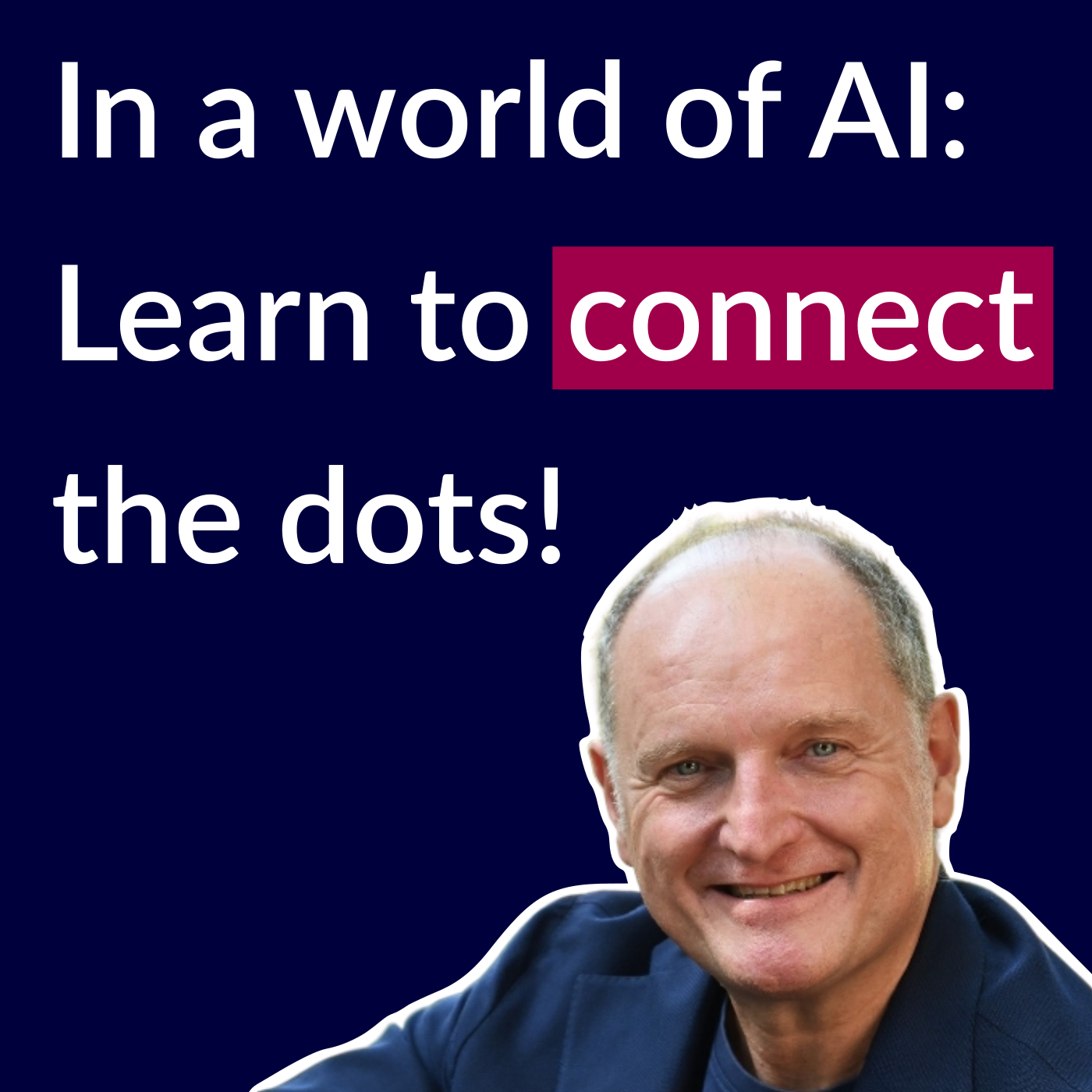
Guido Saracco about Tecnosofia and the importance of combining humanism and technology in education
Democracy Innovators | 2025-08-20 | 51:56
Guido Saracco is professor at the Polytechnic University of Turin and author of the book “Tecnosofia: technology and humanism for a new science” (title translated). He believes that future education needs to combine technological and human teaching, since engineering increasingly implies social impact.
Top Keywords
- human 0.007
- cannot 0.007
- ally 0.007
- italy 0.006
- rector 0.005
- education 0.005
- engineers 0.005
- tremendous 0.005
- cannot avoid 0.005
- time 0.005
- pathway 0.004
- technosophia 0.004
Transcript
Speaker 0
0:00 – 0:06
Welcome on another episode of Democracy Innovators podcast. And our guest of today is, Guido Saracco.
Speaker 1
0:07 – 0:10
And It's a pleasure to be here with you.
Speaker 0
0:10 – 0:20
Thank you for your time. And, I mean, you're a professor and, you were also rector of, Polytechnic of Turin.
Speaker 1
0:20 – 0:40
Right? And, Yeah. Yeah. I was I I ended my mandate. In Italy, we have a single mandate of six years where you can actually put into practice your ideas, your program, and then it's that's it. You have to quit and leave another rectum, in your place. Yes.
Speaker 0
0:40 – 0:59
And, you have written a book, that is called, Technosofia Yeah. With, Maurizio Ferraris. And, I would like to ask you, why, how it happened, and, if you'd like to tell us something about this book.
Speaker 1
0:59 – 9:44
Yeah. Well, indeed, everything starts from, a part of my program as a rector, that, was meant to change the way we are educating engineers. At the Politecnico di Torino, we are a technical university, and we have, graduation in the area of architecture and engineering. But architects, do, build around persons and communities. So they intrinsically have, in their education pathway, disciplines like sociology, economics, philosophy, also psychology. But this was missing completely in the area of engineering. And nowadays, without, having such, knowledge, engineers cannot properly conceive a technology. Technology is always built for a specific goal, and it is, part of the creativity of engineers. I know that engineer and creator look like, two conflicting things. An engineer is depicted like a gray person that is, with, thick glasses and, bold sometimes that is more applying science in a mathematical or physical way, but he he is a creator by definition, because engineers are producing technologies, and a technology has never been there before being conceived by a technologist to solve some problem or to catch some opportunity. Nowadays, with the fall of the previous big companies, Ir Torino, where I am speaking from, is the city of the largest automobile factory of Italy that was, the Fiat, the Fabrica Italiana Automobilitarino, the change into, Fiat Chrysler automobile, then change once more, into Stellantis with this, agreement with Peugeot that is now hosting, the what was Fiat before. This big company was dictating the products and driving the economy, and engineers were were just asked to do the stuff, technical stuff. But the decision on a product was taken by someone in the company, from the design area or from the economics area. Nowadays, we are, directly, asking, engineers and groups of, interdisciplinary professionals like engineers and designers and economic, and also philosophers to conceive a product together. And, engineers cannot, avoid to have some expertise in social and human sciences. Otherwise, they are not at the first place understanding the problems they have to solve, that are more and more complex and depends on humans and on societies. And on the other side, they cannot properly assess the consequences in society of the technologies they are conceiving, which need to be predicted. Otherwise, you are at the risk of having a product that is failing in the market, even if it may be a good, solution from a technical viewpoint. So with this in mind, at the Politecnico Auditorino, we introduced philosophy, sociology, economics, law, political sciences in the buck the bucket of, disciplines that can be picked up by engineers to strengthen them. And we also introduced, modules, education modules, in which they cooperate with a scientist from hard science or a technology technologist and a human, scientist, a philosopher, to face some problems, context problems. We call them, grandi spide, which means big challenges. I'm talking about the problem of global warming, the problem of, reduction of, inequalities that are expanding or, the problem of relationship between, humans and machines, like, artificial intelligence driven ones, by working in in groups of students that had different ambitions at the second year of engineers after first year of, hard sciences, you know, analysis one, analysis two, physics, chemistry, informatics. They breathe complexity in this grandest speed, margin, and they hear from the opinions of technologists and human scientists. And that's a a very good playground to, strengthen their critical sense, their soft skills, but also thinking skills. And then we also added, in the, master part, not only in the bachelor, but also in the master part of the, education pathways of engineers, we introduce challenges that are, something like, innovation challenges from industries. An industry can pace the polytechnic auditorino to open a challenge, students get into this challenge, and working in groups, think of, innovation solutions. Once more, there is a tutor from the industry, which may be an economist, manager, or or a technologist, but they understand already within the, pathway, the educational pathway, the complexity and what is needed outside. Because the first thing I underlined to my colleagues, and they elected me because it's a democratic process in the university, is that we have to change. We cannot continue teaching the same way we have been teaching from ages, from the beginning. So solid hard science basis and then methodologies for the design, in the different engineering disciplines. We need this, immersion into human and social sciences. So this led me to get into contact with many, philosophers, sociologists, economists, and, one of them was Maurizio Ferraris. And, together, we are both positive towards technologies, because there are many philosophers that think that technologies are sort of, human, eating, stuff. On the other end, me and, professor Ferraris think that technologies are the sublimation of human intelligence and creativity because they come from humans. They are created by humans. And for this reason, we decided to write Technosophia, this book, published by La Terce. It was in, 2023. And, there, we give opinions, from our different viewpoints. I'm a chemical engineer. He's a philosopher. On different stuff, also proposing solutions that are, based on our two different, viewpoints and knowledges, and it's a sort of ping pong. We, at the beginning, were thinking of, writing as a single author, merging, but it's impossible. And so by this ping pong, we, little by little, converge into some possible, solutions, for, the the severe problems we are facing into many direction in this very fast changing, world and, which is, sometimes threatening, but we were trying to find, according to our our positive attitude solutions. This is the reason why we wrote Technosophia.
Speaker 0
9:46 – 10:27
And, I totally agree about the, I would say, I would call it human centered approach and, also the fact that, inside the the polytechnic, people people have the possibility to study something related to human science and, the past of humans, maybe. And, I'm thinking about about this separation of knowledge that often we have seen it. And, and so, basically, you're saying that, we should have more people that studied both, hard science and human science, so, an hybrid
Speaker 1
10:27 – 20:01
hybrid There is, an opportunity now in our, legislation that is to to take simultaneously two different degrees. Doppia largia, double, laureate, which, happened a few years ago. It was a decision from the parliament, and I know personally the the member of the, Chamber of Deputies, or cameraman de deputati, Alessandro Fusake, that was the driver of that change. It's not really come to an effective, practice, because it needs some, definition of, specific procedures. There's always this tail after you take a decision, then it's not yet done. You need to put it into practice, and it requires the modification of several, administrative stuff. But, when I was young, I could not be a student simultaneously of philosophy and physics. When I finished my high school, I was uncertain whether to become a philosopher or a physicist. I decided to become an engineer, which nowadays is a sort of mix, as I told you. But at my time, it was not like that. The the the career of engineer was based on hard sciences and then technical stuff. This is an opportunity. We cooked, at the Politic Naturino. We have, some possibility to have a double, master degree into neighbouring disciplines like, chemical engineering, environment engineer, chemical engineer, and, energy engineer, in a sort of accelerated pathway. Like, in three years, you get two double degree two master degrees. And so there is this attempt to mix, cultures, without losing quality, and, I think that this is, strongly needed. I think that the university is too, fixed, and too, conditioned by, chains, I would say, that are, sticking onto a too, not much flexible, way of declining to of of, describing the curricula because the world is changing and you need to change. I'm not, in favor of, producing curricula, ever changing. So we need to focus on, the core competencies and then, have, maybe some, small, parts of the education pathway that merge you into a specific task. Because these last tasks are changing so fast that we cannot keep. So keep keep keep with with this change. And what what I mean is that if you take some education pathway, of five years, a three plus two Bologna process, and, and you keep it fixed, When a a guy or lady gets into it, it gets out of the of this pipeline, and it may not recognize the world that it has been prepared to face through a dedication pathway. So the change is essential. This requires profound, modification of our teaching, and, we are at the risk that the universities, as we know them, now are going to be offset by a a other way of educating people, which I hope will not happen, but we need to change. And for this reason, I'm also involved with, some, universities that are trying to get to working students, like, or, procure a continuous education, mostly online. Because when you want to reach people working, you cannot pretend that they are gathering into it. But online, you can, with with specific techniques, be engaging, even if it is less easy than in a presence. But, this, profound change is going to face a sort of tsunami now with the, generative AI. And, but I was, there for the last year of my rectory when, Sam Altman was launching this, post on egg on Twitter. Look, we have prepared this Chargee Pitie. You can try it, there. That was a revolution because it was the first, LLM, and, but I couldn't make, take this into account in my rectory, so I started studying how to embody, this kind of, tremendous, tool, into education pathways because otherwise, you cannot turn your face, elsewhere. You have to face this. And this is a revolution in the revolution I, promote, and this once more implies that we have to change our, techniques and, pedagogical techniques. And this is a tremendous stuff. I just finished writing a book. I'm going to refine it with the editor, with Laterza, the same editor of Technica Sofia. It's a book on, digital ally. I call it like like that. So something like it's it's your ally. It's sort of private, but it's, producing, the functions that you need to expand your cognitive potential. And, that's something that we have to, conceive, design, put into practice in a different way from what is happening. I mean, Judge Ept is now conceived to reply to whatever question on whatever topic in in in seconds, to be marketed worldwide to as many people as possible. But this personal AI, I think should be the solution that is, good compromise, between privacy, respect of our learning process. We we cannot be, know everything. We need to specialize somehow, and your allies should be specialized alongside with your learning process. And, that's the way to protect it, but you use this kind of, tremendous, tools that are now happening. For this reason, I wrote this new book that is going to be in the libraries, in January 26, and, it was fun. Sometimes it's a threatening area because it's, really, challenging your human being, but it's, it's it's amazing. I hope that, Europe, if not Italy itself, is going to clarify what we are going to be in ten years' time and change the educational pathways according to this hybridization we are going to have, where the human should be in control. But, you cannot avoid using these kind of tremendous tools. And that's that's, the things that are keeping me passionate about, science and technology now. After becoming a rector, I left the research in my, specialization area. You know, in Italy, we have this, tutto logo, which means, expert of everything. And there is this joke, are you a tutto logo? Are you a specialist? Also is the reply because when you become a rector, you really need to know what motivates your colleagues and, in order to motivate them. And, you become really, you leave your specialization. You become but this allows you to get, an holistic view of everything, and also understand better these complex dynamics, and also propose solutions, that are keeping complexity into account but also can resist because, alone, we cannot, we cannot find proper solution for everything.
Speaker 0
20:01 – 20:13
Yeah. I'm thinking, the world is changing, and, if, Technosophia was published in 2023 or and now you have written a a new book, like
Speaker 1
20:14 – 20:16
The Digital Aligned.
Speaker 0
20:17 – 20:29
Yeah. Like, what changed? Like, did you change any anything, like, did you change any idea? Because, just few year passed, but a lot of,
Speaker 1
20:30 – 30:24
I give you an an example. I'll give you an example, which I I think it's, is going to, be interesting for our listen listeners, our followers here. At the time of Technosophia, one of the things we were proposing was to try to assist old people. We are growing as a country in Italy. Like, in Japan, these are the two developed countries that are aging most. We have many more people that needs care becoming older, and less and less people that is young, that can be a, a sort of, caregiver to these old people. We were thinking in Technosofia to have young people, in what we call in Italy, servizzo civillio universare, so a sort of, period of life after the graduation where where young people give something to society with a small wage and in which a single, young man or young woman would, go to four or five old people and talk to them and get memories out of their brains. Old people nowadays are not born in the digital area or are not used to talk, and so their traces, digital traces are nil. And this means that, this, white, memories, arena is, is not going to stay with us, is going to go away, pass away with them. But extracting these memories, a state like Italy can get a lot of data and maybe do something with this data that can justify a specific assistance. So it's a sort of circular economy. No? The old people give memories through these young caregivers to the state, and the state gives better, sanitary assistance. At that time, we were thinking of having this human to human interface, but, one anthropologist, a friend of mine, Christina Cengi, told me, look, I'm not sure, and there are several evidence that things go otherwise, that humans are, eager to talk to humans about their own memories, and they prefer, is this guy? Who Who is this guy? Who is this lady that is asking me things? It takes time to and maybe you never succeed. With a digital thing, it's maybe easier, and this is, the way telemedicine works. Sometimes you get more information for a for a medication through digital, telemedicine sensors or talks or or talking by by the by the old people. And then so this is preparing them when they come at in case of need. But then, this, was strengthened when Ceaigipity came, and it was after. I mean, we were finalizing Technosophia, so we couldn't take it into account. So but nowadays, we know that, it's tremendous stuff to talk to, and it's enabling, the possibility to have agents that are behaving like humans but are digital and with whom you can talk. This, on one side. But if you take this into a private personal agent, your digital ally, and it lives with you. It grows within you, and it remains yours. It's not driven by the GPTE. It's not giving data inside. It's an LLM open that is closed on your device and grows with you because you are a source of data daily with your experiences, with your talks. And with all the things that you have read, you have learned, little by little, this device becomes you. And this device is not going to die. You are going to die, but he's going, or she, depends on how do you call it, she's going to remain with a sort of carbon footprint of your brain, of your way of thinking, of your way of producing, solutions. And, this automatically gives you memories available, memories of a lifetime, but very precise. But this is yours, so you can't use them unless you desire. So think of a human being with this digital ally that comes to the end of his, and has to decide what to do with this. Will it be incinerated with me, destroyed, or will be will it be available to my son, my daughter? So as they so that so this is tremendous stuff. It's difficult to avoid to have, sort of, skiing, electric electricity. I don't know how to translate it in English. La pelle doke in Italy. Yeah. In Italy. Yeah. But it's, something that is there, is going to happen. And maybe not bad to happen because this is a way to control this. What these big techs are doing is they are running directly to transhumanism. They are running to something that is no more a human being. It's something integrated. They want to talk directly through the brain without even talking through a language. Direct connection of thought I mean, we are not that fast. We need to think. Language is very effective, but has our timing. I don't want to be hybridized with something that is running faster than my brain and is going to control my brain. I these are what when I told you, I hope that our state will decide what we're going to be in ten years' time in order to design things so that it happens in a controlled way. I don't see anyone, rising the the the the glance at that level. We are trying to cope with what happens and limit this and that, but there is no strategy, no vision at the moment. So one of the reason why I wrote the digital allay, La Vieato Digital, is exactly to provide some, options to concrete and concrete solution in the direction of having some tool available, which is not overwhelming us. But at the same time, you cannot avoid, as I told you, you cannot say it doesn't exist. Let's continue educating people as it is has never been, produced. This is, nonsense. Because and and the strongest battle at the moment between China and The US, on who is going to come to superintelligence, first, that's breathtaking on the one side, but it's very dangerous on the other side because, who is coming to this, before the other is, can dominate the world and, may be the cause of con of conflicts, war, because it's, so dangerous. So we we definitely have to get some control, into this. At the moment, I don't see very much. I see Europe leading this, as always, with the AI act and, but the two poles that are competing now, seem not to have, significant, constraints to this, rush. And, this is one of the major issues. My current activity, for Politecnico on, production of cultural media or events, theater plays, documentaries, for the cinema or the television and so on, we are going to have a list of podcasts on the possible end of the world, which has to be intended as end of humanity that we can, serve ourselves through technologies. And there are so many options, but one option is that the rush to be the leader of artificial intelligence leads us to such a powerful tool that the opponent may start a war to, avoid the dominance of the other. So this is one of one option, but there are so many.
Speaker 0
30:26 – 31:31
I was thinking about the AI ally, and, and, yeah, as you said, the, safety and ownership is very important because otherwise, I'm thinking it would be, like, owned by big tech. And also, I will not be very, I will be quite scared by the, you know, having a direct connection. And because, you know, they say that a safe computer is a computer that is not turned on, so that is off. And so having a computer that is on connected to the Internet, would be quite scaring, thermostat safety. And, and this importance of data, it's connected maybe in some way to dataism, this, possible, new religion where data is the most important thing. I I was fond of Dadaism.
Speaker 1
31:34 – 32:03
Those artists, that were the futurists. I I remember a nice exhibition in Palazzo Gracie in Venezia on Dadaism. These these artists that are fond of, technologies and are sort of, these these painters and Marinetti. I don't know whether you know them. I mean, they're in the early years of past centuries in Italy.
Speaker 0
32:04 – 32:05
Yeah.
Speaker 1
32:07 – 37:14
I don't I'm not aware of this dataism, but, it's a technological issue. The more the data you can handle in into in quality, the the better it is for your use of, artificial intelligence. So there is a culture of data and quality of data, that is spreading around in all industries because, if you have good data that are coherent and consistent at the same time, that then you can draw, inferences, through these machine learning, deep learning algorithms. And so this this is the way to go. I know that a company like, formerly called Solvay, that is a chemical company, now it's called SunScope, has changed the name, recently in parts of it. Blight, this, sensor everywhere in a plant where they produce the Teflon, plastics, those that are used to make, not adhering the food on the on the dish. And, by sensors and by different control, pathways derived by machine learning on this, the data derived from the sensor, they could, control the plant in a different way, from the ordinary way of controlling plants, like, the level of liquid in a tank is lowering, then you put additional liquid so that it gets back to the right level or the temperature is rising, you put more cooling agents into practice and then it gets slower. This is typical way of controlling chemical plants. But they through different, artificial intelligence based control, tools, they could, increase the productivity by 20%. This is, tremendous, stuff. And this is another way, artificial intelligence is changing things so that those that, like me or my colleagues, teach people how to behave, and how to act as professionals, cannot avoid this because this this is effective in so many, things. I'm not talking about the area of language, large language models that we were talking about before, but to simply use of data and artificial intelligence, machine learning and deep learning techniques. So this is, actually there, and it's changing so many things that we need to, first of all, change the way we are teaching people, so as to prepare them to use these tools and not, try. But get back to the beginning of our talk. In order to be stronger and to be in control, you need to be, prepared, through human social sciences. I'm expecting less specialization on hard issues, hard sciences, because this tool can do a lot of the job for you and, a revival, of, human and social sciences that are strengthening your critical sense of things and, helping you to connect the dots and take decisions, better. This is fun. In this last part of my career, I have been improving, also personally as a person and as a leader, through this happy to be engaged in this wider span of disciplines to understand complex problems, and I will go on with my career of writer, of community, of creator, among social networks, providing common people, with my thoughts, and also producer through polytechnic auditorino of, whatever people like to to see or listen to. And and there I bring reflections of science and technology versus the problems on or opportunities that are there in society unsolved or uncapped unquote. And this is, fun. I have to say it's fun. I'm, much more engaged than when I was a researcher in my sharp disciplines and I had to be there running, you know, the publish or perish, attitude, that you have to keep if you want to be fast in your academic career. But now it's a part of my life that where I feel, more engaged and, happy with what I what I'm doing, actually. Wonderful.
Speaker 0
37:15 – 37:50
And, I was thinking about, other ways of, teaching, educating people. And also these, I mean, technology could help people also in term of governance. So there were also in the past also in Italy some experiment of direct democracy. They didn't really work. And, but I'm thinking about new tools that could allow people, like, to, yeah, to find new ways of governance. So a lot of
Speaker 1
37:51 – 42:59
Yes. I am I, understand. My personal view is that, I hope that my activity has also a goal, get the awareness of common people, higher about the problems, but also the opportunities to find scientific and technological solutions together. If the level of, awareness of people rises also the level of politicians, also by keeping the current governance structure, will adapt. The complexity of the world would need politicians that are, keeping the pace with this complexity and fast change. This is, difficult because politicians are common people, and, basically, they are elected in democracies. And, we need to, rise the level of people to have a rise also in the level of politicians. But when I was rector, I also promoted schools of technologies for politicians, and I, get in got engaged with the left, center, and and right parties on this in order to be independent. They were asking us different, strategies to get to their either young young students of, schools of politics or or, already active, politicians. But, if every one of us, every university does that, that would would also help. You get to be a politician, and you get some, tailored, education pathway, to be aware of what's going on and what are the potentials. And if, institutions like, academics, or universities, public university, take this into account. They are bound to be independent, not to have biases, and this is going to be, positive stuff. On the other hand, the there are, attempts to have this, digital means that is sharing of, knowledge, common people, and involvement of common people. But, I, would suggest our viewers to to go through the work of Dirk Helbing that was, writing on this, and how to render the Internet something that is really not biased. But it was not successful, and it is, tremendous stuff, because nowadays, Internet, the Internet, that is the place where you can easily exchange, data information and, is strongly biased and is strongly governed by market opportunities is the key players, big techs, Google, but the the most visited, platforms are bloody commercial marketing, the end of platforms. It's difficult to amend this. Dirk Gelbing was, proposing a sort of reliability score for the different web pages that will help you to have something there granted, or as independent, as as, avoid fake news. But, the web has become really a a sort of bazaar, and, I'm I I am, at the end of the story, I personally decided to work getting into this bazaar with my own opinions, driving Politecnico di Torino to produce culture also through social networks, but also through theater plays, films for the move movies for the cinema and, television, bringing our viewpoints and also not just producing, knowledge sharing to common people, but also producing for politicians that some education, packages, the role of technologies in in society that is becoming, stronger and stronger. So they cannot avoid, to know something about that. But I I thought that this would have been working more. Right? And maybe your platform here has a sort of thoughts or is pursuing different ideas, but this I is what I decided. I would like to bring this to use to this, inter
Speaker 0
43:00 – 43:19
Now what I was thinking before, like, in term of governance, is because, like, what you were saying about the AI ally, that in some way, if I, I'll have an AI ally and you'll have one, and then we have a conflict, then the two AI could eventually talk together
Speaker 1
43:20 – 44:41
and help us to resolve. You know, one one opportunity, but you always have, you're right. You always have to decide whether you want to put into contact the two staff. And but in in an education context, you have the allies of the students and the lie of the teacher, and they can be in contact. And the teacher may understand much more about the effectiveness of his teaching practice, to to the single students. A tremendous potential is that through the ally, the ally can act as your evaluator daily and understand whether you are following or not and procuring, information, not just to the teacher, but also to you directly, underlining that you should read this and that to recover, or you are okay. You can dare to go beyond the the limit and expand your knowledge. So this is called designing on the single person, the education pathways. This is going to be helped by the personal AI. Now that's amazing. I mean, there is so many things. I will send you a signed book of mine.
Speaker 0
44:44 – 45:14
Thank you. And, yeah, I was thinking also two things. One is that, I mean, with this kind of AI ally that could evaluate us, in some way, we could also not do, take exams anymore. Like, maybe it could be, like, just the AI agents that tell us if we are ready, if we understood the topic or not.
Speaker 1
45:14 – 48:03
And, I think that you will always have will have to put the human in the loop. I mean, it's okay, but, the teacher should check something. I mean, any artificial intelligence based solution needs to have the human in the loop. And if you are the tested stuff, you cannot be the human you are already the human in the loop, but you are you need to check whether the AI, gave you the right, I mean, the human in the loop should be there. But, the advantage in the education is that AI is always with you. And from time to time, because a teacher I I was teaching and I'm going to teach, 250 students at the beginning of their, chemistry, at the beginning of their education pathways. I cannot be there for any one of them. I cannot. But from time to time, I can. Based also on what's going on, maybe I will be, it will be possible to be there when it's needed to the student that is needed. And in any case, check what has been going on because you cannot rely 100% on AI. The the the the most trivial, stuff is the hallucinations. No? But, it's always safer to have the human in the loop. So, from time to time, you have to to to have, the teacher that is checking, but, indeed, it is going to simplify a lot and be more effective. The risk is of nowadays practice is that you don't understand anything. You get after the six months to the exam, you are, rejected, and you go back to the beginning. If you follow online, in real time, the preparation, you can recover, and then that would be easy to pass the exam at the end. But if the group is six months, that that's tremendous, and sometimes this happens because the teacher has no time for a single student. And, with this, undersizement of the, teachers, at the university in Italy, this is a serious problem. The digital ally can help a lot there to fragment the classroom and to have a personal assistant done. It's going to simplify and maybe also, make, some new pedagogical, skills,
Speaker 0
48:04 – 48:10
be Okay. About, would you like to share something about your personal background?
Speaker 1
48:11 – 50:20
So Yes. I I think to end up, my personal background is, I was a, a bloody scientist in catalyst science. I was dealing with the development of, after treatment system for the exhaust of cars, for instance, to abate the pollutants. At that time, my friends were were pulling my legs by saying, you chemists are producing pollutants and then destroying them. You create your own job, and it's a circular economy. And this is correct. I mean, chemistry is always regarded as a sort of polluting stuff that is also the solution to depollute things. Then I become active in the area of, global warming, on the c o two as a molecule and as a even a, material that can produce something else and so so as to catch the opportunity of sequestrating it from the atmosphere and then produce something with it. And once more, they say, oh, you, chemist, were creating the fossil fuels with the petrochemical companies, and then, you produced the global warming. And now you are picking up c o two, and once more, you're getting it's correct. So chemistry is indeed, at the heart of, nature and, and also what is called anthropochenia, anthropocene, so the this era that is so heavily characterized by human products. Indeed, as a as a chemical engineer, I feel engaged into this, and I'm also writing books on the global warming, just published at the 2000 and, '24, a book called, Green Chemistry five point zero, with a publisher called Zani Kayley that is for very famous for schools. So, that was my background. But as a rector, I became a tuto logo. I know. So interested in everything and,
Speaker 0
50:21 – 50:41
and connecting the dots, as I told you. I really like this expression about connecting the dots. And, if you have any, message for the people that are researching for a new kind of, use of technology, good use, I mean, people that are connecting the dots. I I think that we cannot avoid
Speaker 1
50:42 – 51:47
being interested in everything and studying. In this period of my life, I I'm studying like I've never been studying before. Getting information, digesting the information, creating thoughts, creating ideas, and, I I think that every one of us should do this. And without, fear, and this is a way to become, actors of solutions. Wherever you are, where whatever is your level of knowledge, you can improve it, and it's it's it's going to be better for for you. I think that our society should put this education in the first place. Otherwise, we are not keeping, up with the changes, and we are not going to find solutions, and we are in, at a risk. This is my message, and this is something that I'm heavily involved in, personally, in this period of my life.
Speaker 0
51:47 – 51:52
So thank you a lot, for your time. Thank you. Thank you.