Speaker 0
0:00 – 0:28
Welcome on another episode of Democracy Innovators podcast, and our guest of today is Garrett Ferry. And, I mean, we met in, Kernel community, and I saw your project. That was really interesting. And, I I I don't know. Like, as a first question, I would like to ask you, like, something about your project, and maybe then we we we see something about your background. And,
Speaker 1
0:29 – 5:21
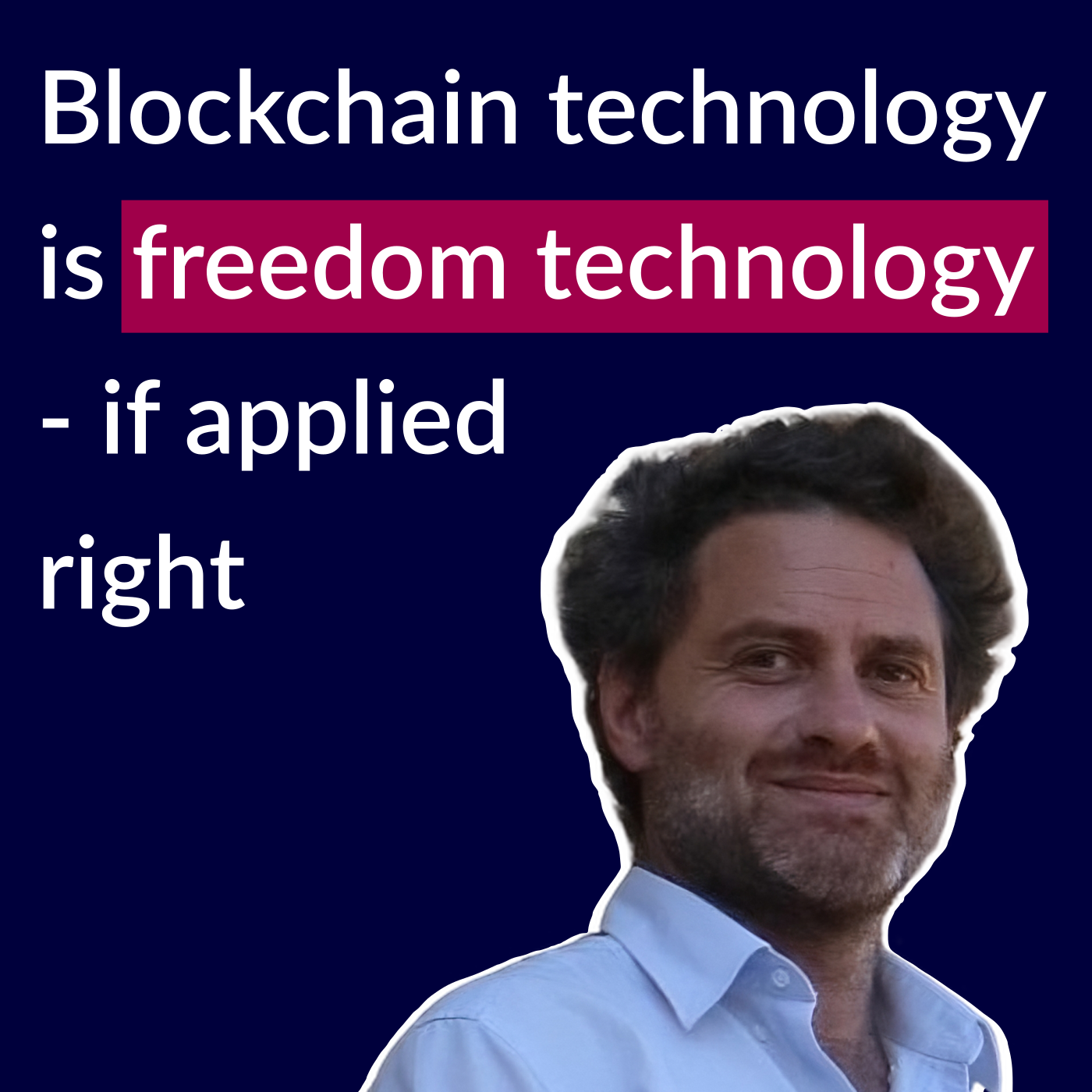
Sure. Well, I mean, my project that actually ties into my background, so I'll just step into that for a little bit. I I trained as a lawyer, twenty years ago or a bit more maybe and, got admitted to the bar as a barrister and solicitor. I'm I'm in calling from Auckland, New Zealand. And, then in the preceding twenty years, I've kind of always remained interested in it just from a social justice point of view and I've worked a lot in social impact and arts and music and always sort of with a social conscience. I've been drawn to music and art expressions like that. So law naturally works into that as well. And I guess in the last twenty years or so I've really kind of reverse engineered what I got taught at law school the legal system the legal system which is just one aspect of law actually when you look broader there's much bigger modalities and jurisdictions and legacies histories of law so I became interested in that and have really I I sort of apply the law now I don't I don't practice and I don't act I just, as a man standing on the land applying the law, which is different to a person who, you know, acts or appears personally in the legal system. So they're different they're different statuses in different jurisdiction and I'm kind of fascinated by what makes up those claims and those statuses in law and different using different jurisdictions, how people in the know of, you know, sort of have private foundations and private trusts and things and actually operate in different forms of law. So that interested me and then the convergence of that with blockchain and web three technologies I saw as a natural fit I used to run you know run a label music label and have artists and we put out music physical copies cds and vinyl around the world different jurisdictions, not a huge, not not all the way around the world but different places, Europe, you know, North America, Japan etcetera and we found that once this the shift to piracy and then digital came, it meant we no longer had a business model. So when I found out about digital scarcity, improvable ownership in the digital realm, I I thought, you know, if that had happened fifteen years ago or ten years ago, it would have just meant that we were totally sweet because we could have proved the ownership and it would have come at a time when the digital models hadn't developed so much. So now streaming's entrenched, but really, if you wind it back, it was never a good model to develop. It was just the default and logic of numbers and inertia and economic factors mean that everybody developed it, but really you could have had NFT ownership and provable ownership direct to the artist. Kinda like a band camp model, but on the blockchain, you know? So then I saw the convergence of all that stuff and also with identity, same thing. You know, we have these passports and and, we have to carry them around. Our identity is defined for us by governments and other verifiers and issuers etcetera and it doesn't make any sense to be talking about establishing yourself in lawful status because you need to define your identity and you need to find how you interact and what status you do so economically, privately, socially, whatever, you know. So, there's different statuses to to employ. So it was really convergence of all those things. And you know working on a project called we're calling it SILT at the moment which is just sovereign or it could be self actualized identity layer tool. It's just a blockchain tool that talks about the status of the holder and provides tools to to in law and also just in you know natural law and opening the spaces for, self actualized identity so for people to determine their own ritualistic way to to imprint their first identity. And then then you have different aspects of law that you can dip in and out of and use different statuses. But you do it you do it with paperwork and international law and you know you got to make claims is the thing that people don't understand. With identity you have to make claims because there's claims out there that are being put in your name, the birth certificate and things like that and they're not generated by you and you don't control them and that's the cause of a lot of economic troubles for people because they're operating as a person in the legal system and they're subject to rules and regulations and blah blah blah but actually if you if you change your status you're not subject to any of that you you you go higher jurisdictions. So yeah my background and my and my project are really convergence of all that stuff so identity law and you know just the whole the whole blockchain aspect of approval, ownership and peer to peer and freedom technology is is kind of where I'm fascinated by. I mean, I'm probably like you, you know, we we met in Colonel and you we talked I saw you had a lot of ideas and I was like, oh, this guy's really you know, you're in there and you're testing things and it's it's cool because you get excited about it because the technology is freedom technology for applied right. At the moment, it's like a casino. Right? But freedom technology is where it was is where my head at. But, you know, it's a long intro. Sorry, but you you jumped in there. No. No.
Speaker 0
5:22 – 6:25
I mean, I really like what you said about the reverse engineering, the legal system, like, to to understand what has been explained as something that there is the legal system, but then can be, like, taught also in different ways. And, and also for, like, I would say good things because, I mean, my impression, like, that law also, if we see where it came from, like, I mean, the first universities, they were about law or theology that were, like, something that was very, useful to power, to control, like, the land and people. But it's, I I I saw also I was really impressed by maybe there are more lawyers that are interested in blockchains because of this similarity than maybe other people. I don't know. Philosopher or
Speaker 1
6:27 – 7:25
and Yeah. I don't I don't know about that. I think that most of the lawyers are interested in the in the point, you know, point of view because there's a lot of work to do, you know. It's it's interesting novel area as far as pairing regulation with the blockchain and how things work. And that, you know, there are all those questions around, say, DAOs and who pays responsibility and all this idea of, you know, digital ownership and how it transfers into real life, you know, the real world where it has maybe has aspects of harm or a promise being made or or whatever, a bill of exchange, etcetera. So there's a lot of work to be done to sort all that out, and that's one, you know, that's one jurisdiction. I don't really I'm not really an expert in that. I haven't could be, but I have to go and do another few years training and just, you know, go in there full on to be able to really comment with any authority on that. So I don't really work in that area, but there's plenty of work for lawyers. I'm not I'm really more of a law researcher or, you know, I apply the law in a broader sense. So, I wouldn't really I mean, I do I am a lawyer, a qualified lawyer, but, I don't go around saying
Speaker 0
7:28 – 7:37
it. I I totally understand you. Like, I mean, what we studied or, like, the degree that we have obtained,
Speaker 1
7:38 – 8:21
It's it's just a name. It's just, labeled Just like everything else we're learn we're learning about. It's just a sliver of the real truth. You know? It's just a little sliver that served special interest. You know, look at this look at the sciences. You know? Look at the health. There's no nutrition mention, and there's no the sciences. There's no non physical aspect to it at all. Whereas we know, you know, that a lot of the aspects that generate the matter and generate the changes in our world are actually non physical, you know. These subtle subtle forces of the universe can't be seen, and they're nonphysical. They're in different realms. So and we're saying, you know, it was written in the East thousand years ago. In the West, we're starting to understand that and starting to apply it, but the universities will possibly never apply that. They'll, you know
Speaker 0
8:22 – 8:33
Yeah. And it's very interesting. I mean, I'm thinking that university are, like, some sort of centralized organization, and, it can be interesting to see something decentralized.
Speaker 1
8:33 – 9:30
And, the Yeah. Yeah. Actually, it's dictated, and and you you can only speak about certain things, and yet peer you know, the peer review system is is, it's just entrenched. Changed power dynamics like like all the institutions. Everything needs to be decentralized. I mean, the power of the masses and our our thought processes and our ability to come up with novel ideas and use AI properly, which, you know, the human mass crowdsource in to me, in combination with AI can run any system, any country. You know? We just need to be given the tools to to do it. And, I think that, you know, Blockchain provides a lot of tools to do it, whether it's bigger Dells or whatever it might be or even the liberal democracy off the blockchain is still really good. But, you know, we've we've reached a point now where we don't need the political political class, and we don't need the institutions and public knowledge, and it doesn't really go anywhere. All the novel stuff is kept out. So, you know, for me, yeah, it's it's about
Speaker 0
9:31 – 9:45
And about, like, I mean, your project, your experiment with the, I mean, the DAO connected with Amnesty. Like, what are your impression thoughts? What happened? Like, how did you
Speaker 1
9:46 – 12:29
Well, we're just, we're at the stage now of just finishing a white paper, and then we're gonna do, hopefully some sort of, we'll do MVP and hopefully some sort of, semi public launch. We'll be using a three, three or four different countries in the Amnesty region. So, Taiwan, Thailand, Australia, New Zealand, possibly one more. And we're gonna do a little experiment in crowdsource advocacy or human rights promotion through Adele, through the MVP. So, yeah, the whole idea with that is that, you know, Amnesty International has, I'm working with Amnesty. I've been doing it for three years now. So, I really I really enjoy it actually. And they've got a 10,000,000 member registered worldwide database of members. You know, there's people who actually answer the emails and, you know, sign on as members, which is, you know, only probably a a, minority of the actual potential, you know, database. But anyway, so 10,000,000 across 70 different countries and they've got no coordination mechanism and, you know, we're at a point now where Amnesty is operating quite a historic model, you know, sort of grassroots advocacy, but really more of, you know, analog, so to speak. So to move into the digital space and allow the some of the core principles of blockchain technology to apply to really enhance human rights and, you know, transparency, gum you know, governance rights, crowdsourced ideation, you know, reporting of verified journalism, supporting grassroots activism straight from blockchain and and, you know, smart contract payments, etcetera. So that's that sort of stuff has happened in projects around the world, especially when it comes to paying, UBI to, say, refugees or migrants or whatever in in, humanitarian situations, for instance. But it hasn't really been done on the scale that we we're thinking of well, we're testing it and we're gonna test probably at two or three different chains, you know, because the need to get a few quotes so to speak for the business but, for the organization. But, you know, we're excited about the fact that it could, it could be quite of, you know, really a really powerful way to bring human rights advocacy and and sort of mainstream it a little bit as well, you know, coordinate incentivize actions that bring about, you know, anti racism or might be, just other aspects of human rights freedom of expression, freedom of movement, these sorts of things. We'd start to identify what they are and then we can reward and promote them and fund them through a mechanism like a DAO, you know. So, a lot, you know, a lot of DAOs are looking, ideas, looking for a community. We're a massive community that desperately needs coordination and, you know, to enhance what we do and to really, you know, leverage and add value to the to the 10,000,000 people already who are who are sort of in there, you know, talking about things. So, it's kind of a no brainer for me. It's just a matter of getting it in, you know, getting it done. But yeah.
Speaker 0
12:30 – 12:48
Yeah. I was thinking, like, about this, experiment with the four different countries. Like, is it more like on, that you're still projecting, like, this experiment, this, or, like, do you already know, like, which kind of software can be used? I don't know.
Speaker 1
12:49 – 14:47
Well, we we we were funded from this first stage. The first chain that we, got a partnership with was Cardano because they were I mean, they were just really open and I know there's a lot of social impact stuff happening in the end. Through the project catalyst, we got we got funded. So, I'm partnering with, Razzalyn is, is a is a friend and colleague, Paris based who is sort of deep in the ecosystem with Cardano and social impact. You know, he runs web three impact, a sustainable ador, and and organizations like that. So he, is my partner in the project, and he's sort of looking after the tech side. But we're we're, you know, we're talking twice a week, and we're sort of really honing in and drilling down into the tech and and, you know, they're having meetings, you know, Zoom meetings or whatever with people. We're we're gonna meet in a conference in Dubai in a week's time, so we're gonna go through a lot of stuff. But, so he's looking after the tech side, but things are things evolve really fast and the and, I mean, you know, a year ago, it would have been completely different. As you know, things evolve in tech, but now I really feel like, cross chain interoperability is cross chain tokenization are things that have just in the last little while become a lot easier, I feel, you know, and it seems like there's a lot more functionality and amazing things than AI integration, you know, certain aspects, you know, especially when it comes to structure perhaps or governance structure is, all all coming online. So, it's hard to really nail down the tech. We have to we have to put a flag in the ground so we're gonna we're gonna do it on this stuff but we're we're pretty close to, to confirming things here. And then it'll it'll just be a sort of, you know, reasonably simple one or two pages. The idea is to earn a token and burn and burn the token. So you're gonna earn it by doing advocacy or doing something or skills enhancement or having your say or reporting on a human rights action in the community or whatever it might be. We're not sure yet. I've gotta talk to the countries and figure out what's works best for their supporters. And then you can burn it by voting on a proposal or something else. We're not sure what else. Some some sort of other reward system. So, that's that's kind of what we're gonna what we're gonna aim to do probably in September.
Speaker 0
14:49 – 15:15
Okay. I'm very interested in knowing which software and, which solution. And I have I'm I'm curious because, as you said, and I was all looking also on your website. I mean, you participate in many, social impact project. And I was wondering when you had this, connection with, the blockchain world that you thought, okay. We have to make a DAO, and,
Speaker 1
15:17 – 18:12
it it can work. Yeah. I kinda just briefly touched on it earlier, but it was actually because I was in music and, a friend of mine, a couple of friends, one here based here, one based in The UK over a period of three or four days, maybe about 2020. It was just when COVID the whole COVID pandemic was starting. And, I I was like, you know, what are we gonna do? And I and I lost a lot of work because I I I didn't get vaccinated, so I'm not interested in that. You know? I mean, people can do what they want, but for me, I'm like, no. That's that's that's not what I'm gonna do. So I lost a lot of contract work, and I was kind of, like, pivoting. It was just the right time and needed something to get into. And when when the penny dropped when I found, you know, when I found out about the idea with music, you could prove because at the time, there was a young artist in South Auckland, young Polynesian artist. He's only 17 years old old, and Jason Derillo, who was a, like, a number one, you know, American pop star took a TikTok little link off him and put it in a song and it went to the song went to number one and then there was this kind of like thing you know semi battle saying well that's my song and then he was up against the giant corporation. He ended up getting I think, a share of, you know, his points on the record or whatever, share of the music publishing. I think, I'm pretty sure it was sorted out, but I just sort of thought of that. It was the same time that I was like, well, if that had been on the blockchain, the future Internet, I believe, will be like, you put your song on, you put it on an address on the blockchain. That's the first time it's published. And then anything that that the, intelligent algorithms of the Internet someone else tries to use that music, even if they do use it, the blockchain will pay you directly your share anyway. It'll be like a secondary sales situation. So you'll get you'll get your share no matter what. And and then we know the use of that particular unique creation or music or whatever it is on the allowed on the Internet, on the new Internet. That's what I kinda believe and hope will happen. So everything's proven we own. And if people wanna use it, you just set the creative copyright share system in place, and then it's all done through smart contracts. Anyone can use it, but they gotta give a tiny residual share to the owner instead of everyone just getting ripped off. And even AI should be doing the same thing, I think. Because it's it's drawing data points from everywhere. So it's got the record. So why can't I pay provable shares to everybody even if it's just a thousandth of a cent? If it's if it's referring to my page, I should be getting a little kickback from there. That would be the intelligent, you know, respectful system, I think. And I think blockchain in the future can do that, but not at the moment. But, you know, so when I thought about that for music, I was like, okay. I need to get into this because I was always into freedom and freedom technology and and, you know, cross cultural work and plurality and different, you know, different forms of governance and consensus and, you know, spiritual aspects and all these sorts of things. But the the money and the technology was like, well, they've got us they've got it all locked down. What are we gonna do? You know? Go back to trading gold. It was like but when I found out about this, if I'm money and for, you know, for digital scarcity and trading on and, you know, through this distributed ledger, I was like, okay. Cool. This is a this is a huge missing piece. So then I was in.
Speaker 0
18:14 – 19:22
Yep. Yeah. Yeah. It's crazy how many things can be done, nowadays. I I think, yeah, I mean, about smart contracts, that is something I mean, I would say quite new. I mean, now it's been many years that we are using them for for experiments. But still, I think that they are something not, we haven't discovered all the possibilities, yet. Also because, as you were saying, like, last year, it was very different in terms of, we didn't have AI so powerful, and also AI allows devs to program and and have, like, this interoperability software between different chains. And, and so I see all the system that is growing. And, I I wanted to ask something about you, like, your personal background, maybe, like, also starting from when you were a child, like, where you lived. Like
Speaker 1
19:24 – 21:17
It's going it's going back to my wife. I, but I grew up in a in a little university town called Dunedin in in New Zealand, the South Island Of New Zealand. My background is my dad my dad is Lebanese and my mom is Scottish from the but from Orkney Island Scottish. So it's very it's kind of like if you look at the web map in New Zealand, map of the world, New Zealand and Dunedin are down in the bottom right corner. Dunedin's like the South and then Orkney is like at the top left at the top of The UK at the very top of the right at the top of Scotland there's a little island like 50 ks or whatever it is one hundred two hundred ks away called Orkney Islands and so my mum's from that area and before that sort of mix of Norwegian and English as well in the in the mix so that's my kind of background I mean I I yeah I mean I grew up in Dunedin and got involved in music and hospitality and things like that did a law degree an anthropology degree and then moved to the big smoke Auckland and then sort of worked in music and culture up here for for a lot and and yeah I mean I actually worked for the British Arts Council, I ran the arts program in New Zealand for about seven years, and so did a lot of cool stuff between The UK and New Zealand and the arts. Had some yeah had some great times during that period and also in Asia, worked a lot in Asia because we were in the regional in the regional East Asia team so there was sort of eight countries so worked a lot and made some really great great contacts and friends. Still have today in that in that region. So, yeah I've always worked in the cross between arts and culture. I mean arts culture and and you know technology more and more lately but social impact. This is my favorite my favorite art is really stuff that says something whether it's visual or music. My favorite artists are the ones who rock the boat and are political and spiritual and say something different, you know? And so, I guess I've always been drawn to that kind of work too.
Speaker 0
21:19 – 21:40
So you have studied also anthropology. That is, very interesting. Also, the master I'm doing now is, I would say, alpha history and alpha anthropology. Also, something about global health, in, in anthropology classes. It's very interesting.
Speaker 1
21:41 – 21:49
Wow. What's the so you're focusing on on particular, like, health modalities from from the past or different what sort of regions are you looking at?
Speaker 0
21:50 – 22:20
I mean, that one was a a class by a professor that he's quite famous, Ivo Quaranta. He's a medical anthropologist, and, I really like the class. It was very, very interesting about, yeah, global health, from an anthropological perspective in the in the last, fifty years, I would say. Oh, no.
Speaker 1
22:21 – 22:32
Yeah. There's so much to know. I so much to read. It's like, there's too there's just too much. You gotta you gotta do all the lines. I'm not gonna do anthropological health. I'll leave that to you. Too much.
Speaker 0
22:32 – 22:58
Yeah. But it was very interesting because it was, in a way also problematizing, the way we we our relationship with health and, and I think it was quite import it it is quite important to do it also with, relationship with science and and so on. And yeah, man.
Speaker 1
22:58 – 23:50
Yeah. It's a it's a it's a myself because it's like, you know, also I think part of what's happening now is people are understanding that you've gotta come back to yourself. You know, you actually gotta you gotta take the control because the world's fucking crazy. And so people that are supposed to be ruling the world are obviously psychopaths or at at the very least, you know, so it's like you gotta, you know, just sort of say enough's enough for for me anyway. But people have to do their have their own path. But for me, I I kinda see, you know, enough's enough Quite a few years ago and see, I'm gonna look after myself and my own health and my own mind and just putting information there and just, you know, responsibly forge your own path because I don't trust the government or any of those institutions. They're all they're all corrupt by by nature now, you know, not even by design. It's just like just because they've been around so long and they're so convoluted and so many special interests knocking heads against each other. They're they're just they have to be corrupt.
Speaker 0
23:51 – 24:13
Yeah. You you mean the way that, I'm thinking about hierarchical system and how they work. And so, I mean, if you are on top, it's because, you someone voted you, and so you make to make it happy also. Mhmm. It's it's quite, so, yeah, they have to be corrupt Oh, alright. To work. Oh, alright.
Speaker 1
24:14 – 24:20
But I mean, I think that decentralization and distributed knowledge is kept as always gonna be way better. So
Speaker 0
24:21 – 25:39
Yeah. Absolutely. Yeah. Also, now they are talking about, collective intelligence. And, I I mean, if in the future, probably hierarchical system were maybe not the only way, but the easiest easier way, to have, like, a lot of people that could live together. I don't know. This is what happened historically. But they see now technology as something that could help in the decentralized power. And, and, like, the the this DAO, I mean, I see that the primary goal of this project include the desire to improve participant coordination for the 10,000,000 member of Amnesty support base. And these are quite ambitious project that, I mean, it will be awesome to see something similar. And, and those are question, related to how did you start. Like, you, discovered Webtree I mean, the blockchain world, Then you had, some thoughts. But then how did you, like, did you contact Amnesty? You were
Speaker 1
25:40 – 29:17
did you already have I had a contract going for, partnerships and thing ahead of a little innovation in the in in the role. So I just went and talked to them. And at that point, I I, you know, I just sort of said to them that I think there's something really powerful happening in blockchain. And I think that, with such a broad offer as kind of the organization around the world that historically and even you know now nowadays as well in terms of research and advocacy and pushing and protecting people and advocating for people, prisoners of conscience etcetera etcetera that Amnesty is kind of owns the ship you know so it's a very broad offer human rights. I was just like you know surely we could find a way that we can incentivize and reward people or accord or do something around human rights protection because and I also said that it's an education tool too because if you you know, the example I use, if I had in a room a 100 people, I said, who put up your hand if you support human rights? Like, 99% put put up their hand. Right? But then I said to them, well, tell me what are human rights. Tell me about them. Describe them to me or or, you know, explain what they actually are, then you'd have the opposite. Like, ninety nine ninety nine people would put wouldn't raise their hand because no one really understands what it is, how it applies to your life, and how to use it, and what are the historical crucial moments that led to each human rights, whether it's, you know, apartheid falling or the death, you know, end of the death penalty and lots of various countries, the amicus advocated successfully for in numbers of countries and you're at 20, I think. So these sorts of things and people who are doing these actions, they should be recorded on blockchains and people should be able to carry around that reputation, you know, as something whether it's an MCTA or whatever, but they should these these sorts of things are worth value. You know, we've got different forms of value. If you can say if there's a value in the attention economy or the movement economy, surely there's value in the human rights economy that we can if I knew you'd been the guy that signed the end of the death penalty in in Malaysia, you know, puts a different perspective on things you know if you're the holder of that sold around nfts like woah that opens doors so why why are we not recognizing those things we've got sports stars and celebrities and blah blah blah we don't really know a lot about human rights you know so combination of all that stuff, I just thought it's gotta be something here. We should look into it. And then it just started from then. You know? I had to do a lot of work and, you know, had to do a lot of explaining to people to understand what it really was about. But the technology, it's about what it can achieve rather than I mean, you don't need to know TCPIP protocols on the Internet to use email and to use the we we don't need to know that stuff. So Blockchain, at the moment, we do need to know bits and pieces and obviously huge ecosystems, building systems and modulars and making them all work together. But we as the consumer or the user or the, you know, individual owning the identity, we don't really need to know about that stuff. We just need need to have a good UX to make sure that it all works and then understand the upside of it. Okay. Well, if I own this stuff and I can do something good and it's recorded and it may lead to some sort of value in the future, then, or I can support my friend or my neighbor who's doing something really amazing that can't get support. I can I can use the amnesty tool to crowdsource ideation or support or, fundraise for them or just point support journalists who are doing verified reports and can't get any any coverage but they're doing the verified reports from the ground you know? So all these different use cases I have evolved as we've developed the process in the the project itself and the research but I just yeah I think it's kind of a no brainer. So it was just series of discussions, really, I think. Presentations. You know? Yeah.
Speaker 0
29:19 – 29:57
I was thinking about, sort of philosophical question in relationship with law and decentralized, I mean, and smart contracts. So, like, in our in our, western liberal democracies, we we have the division of power that is executive, legislative, and the judicial, I don't know, power. And, but sometimes, I thought, like, with smart contracts, you write the law, and then the law is also ex executed at the same time.
Speaker 1
29:59 – 30:27
I mean, when you think of the concept of code code is law, I mean, it is executed in the in the in the block blockchain, but how that relates to some of those that have has implications in real life that we don't really foresee. So there's obviously, you know, that's a that's a very interesting area of research and questioning and real real real world application that's coming, you know, soon. We're gonna find out these issues and have to have to sort them out. Is that what you're thinking?
Speaker 0
30:29 – 31:15
Yeah. I mean, I I was thinking, as you say, like, in the future, we will see I I mean, in the future, we will see new technologies, but also I see that I don't know. I think about something that can be also in a way also this topic this topic, like, I don't know, electronic locks for homes. So I don't know. You you lend me some money. Yeah. And, we're writing the smart contract that every month I have to give you back a certain amount of money. And if I don't, I don't know, my electronic lock doesn't open anymore with my key, but it starts opening with your stuff's coming. It's
Speaker 1
31:16 – 32:05
more like you can't won't be able to get on the airplane, and you won't be able to travel your car out of the city, and you won't be refueled, fuel it, and you won't be able to do a lot of stuff like, you know, the Chinese social credit thing apparently. You know? We're hearing that secondhand. I don't know how much is true, but but hearing that that sort of situation happens, Yeah. All this stuff's there. That's why I've been saying, you know, for me, this is one lone voice and shows plenty others. But I keep saying Web three need we need our own hardware, you know, and our own network because if they could take down the Internet and stop iPhones having any blockchain app or whatever or Android, you know, then what what are we gonna do then? Have we thought that through? What are we gonna do? So we we need to be aware that that stuff's coming down the pipeline. That's that's definitely the, the logical inertia of what's happening is is is getting to that point. You know? So, yeah, we need to do something about it for sure.
Speaker 0
32:07 – 32:49
Yeah. Absolutely. And, also, sometimes, I don't know, like, there is this idea about social credit score relationship with, technology and also this kind of gamification system that reward people if they participate in something. And if and I believe that it it can be also in a way some very nice topic if it's made in a centralized way. So I don't know. I imagine, like, a king, a president that gives, like, in a hierarchical way. But this is also what happened with capitalism. So I will say that we already live in a social credit score system.
Speaker 1
32:50 – 33:29
Exactly. Exactly. We do. Yes. It's not cool there. It's the same same thing. If we think about what the you know living as a free man or woman actually is, if we design means that all the systems that we design are for the benefit of the natural environment for people's health, for exploring consciousness, for elevating the human spirit, for all these things. If we could put all the resources towards that, then that would be the humanity being free in my opinion. But we've almost got the opposite, you know. Everything's, you know, health makes you sick and, you know, work makes you poor and all these things. So
Speaker 0
33:30 – 34:03
Yeah. Because, maybe cooperation that is these things we are working on, I think. Because at the end, every project that wants to have such an impact, it means that people have to cooperate together. I think this is the most difficult thing in history. People, instead of cooperating, they start killing each other, or starting before killing each other, they compete with each other, and then at a certain point, they start killing each other.
Speaker 1
34:03 – 35:10
And, Yeah. Is is it all about resources and money? I mean, I don't know. I mean, I've I've often thought what would be the will it be like if we just took away money and we just pretended? You know? So if I went and buy my coffee, I just pretend to hand over the money, and then they pretend to play the supplier. I mean, in some ways, things wouldn't be that difficult. We just have to learn to cooperate, you know. And the people that didn't cooperate were just idiots or maybe money was free. And we have this abundance like must seems to you know, must seems to think we can have abundance for everybody. It's like but we live in a finite resource planet. So if you're the guy who wants a 100 TVs or a 100 cars, people aren't gonna cooperate with you. You know? So I think that as we mature, the solutions to these systems kind of converge. You know? I think that we'll get to the point where people have to step up and be mature and responsible and co steward, you know, environments and relationships and communities. And then, and it's already happening on a massive scale. And I think the majority of the world's doing this, but it's just not reflected in the mainstream system on on the mainstream narrative. So I have great hope for humanity, but we do need to get this big rock out of the way at first. The centralized rock of filth, you know, we need to get it out of the way, man.
Speaker 0
35:10 – 35:11
Yeah. Or just
Speaker 1
35:12 – 35:14
develop our own parallel system. Yeah.
Speaker 0
35:16 – 35:19
Yeah. I'm very negative in short term and very positive in long term.
Speaker 1
35:20 – 35:59
Okay. I'm the same. I'm not too sure when you get it. No. It's too crazy. But, yeah, because it's I mean, this all but all doesn't make any sense, though. So, you know, you gotta think, well, it's gotta sort itself out sooner or later, but, I mean, who knows how long? I mean, we were you know, we went to we went to school and we were taught war and, like, history. It was called, you know, history, but it was war. But it's like there's been wars my whole life. It's not history, it's just it's getting worse and worse. So, you know, we we were taught that it would have something that happened in the past, the world wars, which are actually European wars. They weren't world wars, they were European wars. But, you know, that sort of war endless war idea is, they never they never went away.
Speaker 0
36:01 – 37:01
Yeah. Yeah. I was thinking before that, it's a sort of cultural problem. I mean, we are used to compete with each other. I mean, the way we are educated, like, also starting from school. I mean, we are educated to just think about our grades and not about, also the situation in the class. And I think there are some, I mean, in a way, it's unrelated, but there are some kind of experiment also related to technology. I'm thinking about the 42 school, where they evaluate people not just on their on what they did, but about all the team. And, and I think that this, help people understanding that it's not just about us, but we are all together also in term of resources and
Speaker 1
37:04 – 37:42
Totally, man. Yeah. That's yeah. There's lots of, you know, books about teal organizations and holacracy and things like that. These sorts of ideas of horizontal ownership and shared resources, etcetera. So I think that, yeah, I I do feel it's all happening. I think it's it's happening in the right way. It just is gonna be really taking a long time and be unevenly distributed. You know? Like I said, features already here, but it's not not evenly distributed yet, which is kinda true. You know? There's pockets of people doing amazing stuff for sure.
Speaker 0
37:44 – 37:52
And when you talk about time, how much when do you think it it's gonna happen? I know it's it's it will be just a speculation,
Speaker 1
37:53 – 37:57
because we don't know what When was it? What what what is gonna happen?
Speaker 0
37:58 – 38:33
No. Like, I mean, now we are talking also about, the possibility to have some, decentralized organization, for amnesty, but also maybe for other entities. So I'm thinking about this, possible decentralized world where everyone has understood that, collaboration is better than competition. And, I I don't know if we will see this world, but, in a way, I think that,
Speaker 1
38:34 – 39:41
I don't mean I don't think it's necessary. I don't think that's probably honoring the plurality of the of the future that we wanna see. There's gotta be that those people who just there's lots of people who get who get the kicks out of capitalism and do really well and they're quite happy not to care about other people and there's lots of people who do the who get the kicks out of capitalism and do really well and do amazing things for people, you know. I mean, in some ways, I think it's really probably the majority. You know? Most people, I think, are really good. So I don't think there's gonna be, like, a complete split. These these are just different tools we can use, but we need to my opinion, we need to get to a situation where communities and families and and cultures and groups of people have ownership of their resources and decision making power about about money creation and money use and and responsible stewardship of their resources etcetera. So, that'll happen incrementally in in degrees in different places. I don't think there's going to be a date and it's already happening in some places and so time wise kind of, you know I mean, it's also about when you decide that you're ready to do it and you embody it, and then the time is now kinda thing. And so, you know yeah. I think it's all happening.
Speaker 0
39:44 – 39:45
So so
Speaker 1
39:45 – 41:44
maybe the time is now, like, to start the Time is now. We know all time is now. That's another point. Obviously, everything's already happened, and we are living in an eternal present moment. So, you know, when you think about it, everything's gonna be alright. And the and the visions that we can foresee of the future are already here and happening and just they're a thing because they're thoughts, and they have form and content and and energy. So they are already building right now. You know? The future's already here. We just there's a future in in the present moment, and it is already being built by consensus. So, you know, time wise I mean, see, I mean, I like the I like the, something with the Buddhist Cohen or something about, you know, saying that, you know, the Buddha came across two two, believers and, you know, they fell at his feet. And the first one said, you know, master, when am I gonna be enlightened? And he and he was like, you know, maybe in a two or three lifetimes, you're doing great. Two or three lifetimes. He's like, oh, no. It was that long that long. And ran away solving the other one. He said, well, master must have. When will I be in life? And he said, for for you, probably two two or three three or four lifetimes. And he went, oh my god. Wow. Amazing. So close. And then boom. He was enlightened on the spot, you know. So, you know, I think what is time and what is what are these things? You know? I mean, there's no rush. I just want you know, if the world's better for my kids I mean, we went to we went to school and we got taught things, and and was all most of it was was just a a sliver of truth, you know, through a through a lens of materialism and empiricism and eurocentrism and over intellectualization. Right? I want for my children to understand the world's cultures and spiritual traditions, to understand different forms of mathematics and hermetics and these sorts of things. The the real knowledge of the earth, to understand that and to be able to use AI tools to earn digital passive income and to do it responsibly. And, then they don't need schooling. What are the I mean, they they are at school at the moment, but I'm also saying to them, hey. This is just one thing. We can learn these things and, you know, I'll teach you some other things as well. And they're not gonna go through fifteen years of schooling. No? Only. You know? We'll be doing other things too.
Speaker 0
41:46 – 41:48
It's also to explore the plurality of knowledge
Speaker 1
41:49 – 42:32
between different cultures. So So many things. And there was a whole thing around the COVID thing. It was like, we had the the western WHO, you know, injection model, and that was it. And it's like, well, even in this country, there's 200 cultures living. You know, it's one of the Auckland City is one of the most per capita, diverse cities in the world, you know, top five. And so we had we've got 200 cultures here, but none of them are allowed to say, you know, 5,000 year old Chinese cultures not to tell us anything about healing for a for a viral and supposed viral infection. So that all that stuff was like, we gotta move past that, man. It's just benefits one central control system at the expense of everybody else, monetarily, health wise, spiritually, mind space wise, you know, the mental damage. So we gotta get past that stuff.
Speaker 0
42:35 – 43:14
Yeah. I totally agree about, exploring different cultures because sometimes we just think that our is the the best one, but that's because I we have read on books that our culture is the best one, and this is then also lead to colonization and, imperialism and other kind of things. And, before, you mentioned the word consensus. That is a a very interesting word. And, I don't know. Do you have any thought about it? So I have some question in the way obviously got different different different
Speaker 1
43:17 – 45:11
different ways of of being in different cultural settings, different times, obviously. I mean, consensus I live in New Zealand. This is a bicultural nation where you have indigenous Maori people, tangata whenua, the people of the land. So consensus building in their communities on the marae, which is their meeting meeting houses for their, you know, communal discussions, community community decision making, and and celebrations, etcetera, you know. So their consensus building takes days and it's very well measured and it brings in spiritual aspects and and all sorts of things. And then on the other side, the Western, you know, the the Pakeha side or the white side, in New Zealand, consensus is very quick and it's gotta be done and you got 09:15 means 09:15 and it's very linear and there's no concept of what we might call Pacific time. I mean in the Pacific cultures in New Zealand say time you know what time are we gonna meet you? It's like, we'll meet when the time is right. And if I miss this boat or miss that train, doesn't it means I'm not supposed to be there at that time. So you gotta show patience. So consensus building is very difficult, I think, and building it in a digital space. I don't know if you can hard code it into I don't know if you can hard code all of it into smart contract design or or protocol design. I think that there needs to be some sort of fluidity to it and, you know, like it almost like geospatial fluid fluidity needs to be like a cultural fluidity so you can have collective consensus building not just individual western centric's very individualistic with consensus building you know I decide this and I decide that or we decide one vote each and then you've got the other forms of consensus building that are older and then newer reflections of that which is like quadratic you know conviction voting or all these sorts of things on blockchain which sort of try and honor the fact that we're all different and we all have shifting ideas about consensus and making decisions. So it's a it's a tricky topic, okay, in in blockchain and and new tech for sure.
Speaker 0
45:15 – 46:22
Absolutely. And I think a lot of, I I have a lot of thoughts in relation to consensus. It's something that, because, yeah. I mean, I think to have a consensus I mean, if you do not have consensus, in a way, you have violence inside of the group because it could be the, I mean, dictatorship of the majority. And, and, also, I think, yeah, that consensus can be reached like, but I don't know. I I associate consensus with power, like, power in a in a sense that, in a horizontal power. Like, I don't know. Like, today, we we had the consensus about having this chat, and we are in different spaces. But I will say also in the same time. I mean, different time zones.
Speaker 1
46:22 – 46:23
Yeah.
Speaker 0
46:23 – 46:39
But maybe it could be, like, specifically about this kind of topic, same time of our lives. That's why we have this consensus. Maybe five years ago, you didn't have this, passion, or maybe I didn't have this.
Speaker 1
46:40 – 47:39
Yeah. Totally. Yeah. Yeah. You're right. A consensus of of meeting your minds and things. It's important. I mean, they're powerful moments, you know, in, life and in our new digital connection life. I mean, through Kernel, I've had some good connections with people and good discussions and, you know, consensus about ideas. And everyone kind of comes, I think, to you know, where we met in that program, it come everyone sort of comes to it with, like, a, unwritten consensus about what we are here, you know, here to do. No one's doing exploitative or extractive kind of models that they just wanna rug pull everybody or I was trying to pump coins or anything like that. No one's doing that sort of stuff. So we've already got a consensus about what we understand, what people are kind of about, you know, and then it's just about finding out the details. But I'd love to learn more about, you know, one of the projects that's on your mind around around consensus. Because I know you you took through through a few things that you were working on, but what's the what's the consensus modeling tool that you're kind of doing? Is there one?
Speaker 0
47:40 – 48:05
What I was working on? No? You mean? Yeah. Yeah. I don't know if it was a consensus, if it was to reach consensus, maybe. It was, civic participation, platform that I I've written their white paper, and I've also developed a small prototype. And, but eventually, I can show it.
Speaker 1
48:07 – 49:14
Cool. Well, that's that's the same. I mean, I think that, also, the point that I was gonna make before is that consensus I like the idea of rough consensus. Like, the idea is that we're never gonna reach a perfect consensus when it's not gonna be unanimous. There's always gonna be different viewpoints. But as long as we reach a point where, the legitimate substantial concerns of everybody are answered. Even if I say, okay. I'm happy to park it now, and the next version, we have to revisit it. But thank you, you know, thank you for us unpicking what my concern is about where we're headed. As long as we can do that and give everybody an open floor, then we have to learn to be have a rough consensus and move forward for the benefit of the alignment of the whole project or the mission or, in our case, human rights, you know. Otherwise, we're gonna get lost in the weeds if we try and argue every aspect of human rights. So I like the idea of rough consensus. I think it's definitely a kind of workable option. It has to respect all parties' input though, you know. And so if someone's got a real grievance, you can't step over that even if there's only one person out of a 100. You know, you have to actually deal with it. Otherwise, you break the rules of the respect of the consensus building.
Speaker 0
49:16 – 50:58
Yeah. I'm thinking also maybe about the, like, if I'm part of a group of a community and I disagree, of course, I can also accept the fact that other people think in a certain way, so I accept that decision. Otherwise, I can also decide, like, to go away, but that some sometime is hard because maybe it's not so easy to find another group. But if that, process is made easier by technology. So I don't know. I don't want, the blue color, but I prefer the yellow one. I can find another community in a easily way that, want to use the yellow color. And then, but, of course, community also have to be in some sort of they they have to be connected. And I'm thinking about all this inter interconnected world, where everyone, in a way, is free to explore, like, to to not be in a community where he doesn't feel good, but at this end of the same time, he can form another one or he can, join another one. And then eventually, that can be mediation, some sort of mediate mediators between, different positions. It's not really clear to me, now. And and I think also for most of the people, it's something new. But really
Speaker 1
50:59 – 52:20
I know you mean it. Mostly, I think it's, there's an aspect that we need to sort of unpick about the actual day to day actions that we're talking about because a lot of it's really small things that revolve around reasonably insignificant amounts of money that are just painful and annoying. And, if we can remove a lot of that stuff between personal interactions and interactions with between us and institution, etcetera, or or, automated through AI to get a lot of that stuff done, then maybe we'll have a bit more space to, you know, elevate ourselves, our thinking higher and and and try and reach consensus by letting some of that stuff go and concentrating on on things that are going to be more beneficial to be have consensus about. I mean a lot of stuff that happens with consensus building and governance and things is just kind of nit picking and people are sort of sticking onto their ideas and thinking their vision of this the way that things should be governed is the best one and it's somehow gonna you know be like a edifice that they can construct in the future and it's gonna house everybody and I just don't know if that's gonna be the case. I think things are gonna have to be really fluid and people gonna have to let things go and we've got to use technology to get rid of some of the crap in our lives you know. Some of the things that we we end up having to do bureaucratically or whatever it just doesn't It's not good for us to be constantly, you know, calibrating the universe day by day.
Speaker 0
52:21 – 52:35
There are a lot of things that doesn't really have sense in our society. I mean, we do them because we think I mean, we live in our society. We do not question things. We just do them.
Speaker 1
52:36 – 52:37
Bad for your health, though. Yeah?
Speaker 0
52:38 – 52:39
If?
Speaker 1
52:39 – 53:23
It's bad for your health as well. Do not if we if we know things are wrong and we don't question them or try and do incremental little thing to change or whatever, then it's gonna kill you in the end. That's my bit of you know? It's my personal experience, you know? Either you gotta deal with it head on and realize that the even our range of what we think is living a healthy and happy life I think is just severely restricted and bounded within, you know, within you know, within limits that don't really affect the the true potential. I mean, I think we could be living intergalactic lives of of bliss and cocreation, and that's you know, and at the moment, we're not really getting too close to that. So
Speaker 0
53:25 – 53:32
You you mean, like, the attitude of, thinking that having a long life is better than having a
Speaker 1
53:33 – 54:12
it's Having a long life or maybe having a lot of luxury things and living, you know, living like, having unlimited material wealth. Some people would say it'd make them happier. I mean, it would make me happy to have unlimited material wealth, but then the challenge is how to use it and how to how to ensure that you don't get lost in materialism because at the end of the day, that's not gonna be for your happiness. So you know these ideas about happiness and what we really want for the world and individually I just don't think we have any perception of what we're capable of as humans and where we are in our evolution or devolution or whatever it is whatever path we're on you know in the cycle. So, yeah, I'm not restricted in my thinking in that respect.
Speaker 0
54:14 – 54:45
Yeah. Some some years ago, I was questioning about the the meaning of life, and I wasn't able to give a a reply to myself. So I, I thought, okay. I'll, I'll think about excluding some some things. So I was thinking like, is it a good car, like, a beautiful car, the meaning of my life? So I was no. Is it a good, beautiful home? No. And so I was doing all all these things to discover what was
Speaker 1
54:46 – 55:12
the the meaning of life. And, actually, I don't have a I I don't know what what is your The meaning of life is just keep asking that question. I keep keep wondering. I mean, I don't I don't think anyone can see that that thing. I mean, yeah. The meaning of life is to give life to life, you know, to be life, to be life, to be in it, be be alive. And then, halfway there in my opinion, but there's many things we we can even know, brother, I don't think. We don't really yeah.
Speaker 0
55:13 – 55:17
So it's it's always a question and never a reply. Never an answer.
Speaker 1
55:19 – 55:29
I think so. I think that's the beauty of it. You know? We don't really get an answer because in this form, we're not capable or appreciative of understanding what that answer could be. You know? I think it just goes on forever.
Speaker 0
55:30 – 55:39
Yeah. Also giving an answer. Sometimes this can be dangerous. I think so. Yeah.
Speaker 1
55:40 – 55:43
It can be an answer to that question. Yeah.
Speaker 0
55:45 – 56:14
And, I mean, going back to the to the DAO, like, how do you imagine it? Like, or, also, like, what are some goals that you expect from this, or also something you are struggling with? I don't know. Maybe there is something you're not able into doing.
Speaker 1
56:17 – 58:20
I mean, really, for me, the biggest challenge is, you know, implementation and, just continuing to have people see the vision and get people on board. And, the tech stack and just the different elements of that, the biggest challenge I think is actually confirming a tech stack to test and leave it malleable enough that somehow we can predict the future to always be able to adapt and evolve it, that's gonna be really hard. Because once you, you know, put cemented DAO or structure in the ground you can't you don't really want to change too much about it. You don't have to be copying pasting information or launching on other chains or hard forking I don't think but, so that's yeah that's that's a big challenge and I'm not an expert in that so I have to take advice and learn as I go along and then you know try and get my head around it so that's definitely a challenge. As for what we want to achieve, I mean we just want to show what's possible, with coordination you know of ideas and people who are who are aligned around the purpose of promoting human rights and how we can somehow and send incentivize and reward that so people understand this is a model that we can use to benefit societies, communities or hyper local situations or whatever it might be is actually to look at what we want to achieve and incentivize it. Direct to source. No big institutions, no big funding programs and USAID situations and all this sort of stuff. Just decide what we want to record and where possible how it can be recorded and tokenized on the blockchain and then and then reward it at source at an impact, you know. And, so they're they're challenges. They're things that are on my mind. It's what we want to get achieved in the area of human rights. So, you know, we're gonna give it a shot.
Speaker 0
58:22 – 58:39
Because because, for other kind of projects like, people were saying that, I mean, money were, an issue because maybe they were not able to find the money for the development of some platform.
Speaker 1
58:41 – 60:05
But Well, y'all can make a case pretty good. So, we've managed to get funding so far. So, I think combination between thinking it through and and really understanding the use case and what, you know, what we've got to offer and then the fact that we've got an organization like Amnesty that's really willing to have the conversation and understand the upsides and see see a vision. You know, I just think it's a it's a no brainer, you know, actually. So I'm kind of going into not that we've applied for a lot of funding but we've been successful with Project Catalyst on Cardano at this point so and I think once you get sort of people who understand this is worth doing because also it sets a precedent for NGOs and and worldwide organizations that they should look at an aspect of this, you know, because you'd have to trans trans transform your whole organization into a DAO or whatever and run everything through it. It'd just be that would be chaos, especially for, like, Amethyst. There's too much there. So but for support or coordination and it's for cause based or theme based situations or initiatives or campaigning advocacy, it's it's a no brainer as a tool as as far as I'm aware. Just the token off side of it. How how to keep incentive and people valuing their input and valuing what they receive out of the out of the project the DAO. That's they're tricky things. So, you know, that'll require some adaptability and and, you know, swift being swift on our feet for sure.
Speaker 0
60:08 – 60:27
Yeah. And, and in the DAO now, like, are there more people that are working on it? Like, how how is going like, the I know, you were saying that you were writing the not the white paper, but
Speaker 1
60:28 – 62:23
The white paper. Yeah. Don't write it. And there's me there's two two of us at the moment who are who are doing it, you know, sort of, half halftime, I guess, point five each. And Reyes, the guy I'm working with, and he's he's got a network of people he's he's talking to, and we're talking, you know, to them all. And so we're sort of networking with a lot, and I'm doing the same within the Amnesty stakeholder community, whether it's, you know, Amnesty Tech in The UK or my regional colleagues. So, we're just continuing to talk and iterate it and so there's a reasonable amount of people involved talking it through. Same with my director here in New Zealand she's she's really on to it and and wants to know more and understands and can pose tough questions and things so it's just about having conversations with people. Once people get it and get that blockchain is more than just bitcoin or cryptocurrency or whatever else there's other use cases for and they understand what the technology is there for then you can have conversations because the penny drops with them after a while and they they think, well, if we can use it for that, then it means I can kinda use it for anything. Yeah. When I said to my dad, you know, down there visiting him, he's in his eighties, and I said, you know, this house, you could tokenize it in the future, and, you know, the mechanism is not quite there now. And a 100 people could own it, and then if it gets sold, then they get their hundredth share automatically. There's no debating or anything like that. Or I could just you could own a hundredth share of it. It would give you limited rights, obviously, to be in here, but, you could have some rights of of, you know, maybe a couple days a year if it was a time share or whatever. And then you could just sell your hundredth share, and it's very simple to do on the blockchain. There's no you know, you need Oracles to determine the price, etcetera, whatever it might be. But as far as the share and the ownership, real world ownership of assets and things and he just the penny dropped here was like, wow. So that means you know, I was like, yeah. That means for everything else. You know? So, essentially, you don't need to own a full house or, you know, if you can't afford it, then for the young people, they should be thinking about these solutions, I think.
Speaker 0
62:26 – 62:51
And, so you you're mainly two people that are, coordinating the working on the project. Right? And, I was wondering, like, is there any, I don't know, was a sort of choice, like, to just be two people or, like, you are also finding other people to collaborate with? Because maybe, I don't know, someone listened to the to this episode, and
Speaker 1
62:51 – 64:34
I don't know if you talk to anybody who want who's interested in is, you know, wants to either help or wants me to help them a little bit or or whatever, I'm I'm happy to talk because, I always find that, you know, when I started out in the Web three and blockchain, it was it's quite lonely because a lot of people doing stuff. And it also suffers from the kind of, I mean, American centric kind of model where everyone, you know, you've got influence and so you get more influence and it's kind of like, well, other people got other things to say. So I just gravitate to the ones who wanna talk and can have interesting discussions. And, you know, at the end of the day that's what it's about for me. I mean, I'll I I've got enough work and things to do on other aspects and my own projects and blockchain interests me. So I'm I'm putting effort into it and enjoying talking to people. I mean I find that web three is the best definitely the best ecosystem I've ever been a part of and things people think fast and they act fast as well you know and I like that because then I go back into the legacy world I'm like, like, things take forever to get done, you know. It's just bizarre. Yeah. You and yourself are thinking about using AI tools for structure and, you know, understanding how to use them to correctly, respectfully, content wise and things. And I look at people who I work in, you know, and other organizations that I come into contact with them, and I'm trying to get things approved. And I just think, you gotta upskill, man. You gotta get with the times. Things are things are moving fast, you know, and it's it's good because we can keep the momentum going. So many projects and ideas get killed. We the spirit gets killed because the bureaucracy just crushes it. Anyway, we shouldn't be doing that. Yeah. Anyway
Speaker 0
64:35 – 65:27
Yeah. People on the Internet, they they have found this way to cooperate. Also, I'm thinking about open source. And That's right. Yeah. Yeah. Yeah. And it's great also that human conversation. And, I mean, as you said, a lot of people do stuff, But, yeah, maybe the most important things is, to talk, especially also now because I'm thinking I mean, my dream is that people can have, I I don't know, this kind of conversation, and then, maybe they are transcripted, and, they can analyze, like, in a collective way. So we can have, all the different opinion, all the different views. And so maybe we can also coordinate, like, with a lot of people in a horizontal way.
Speaker 1
65:28 – 66:13
Yeah. Yeah. That was one of your ideas about the about the, you know, to tap into other people's feeds, say, in their thought processes and having open sourcing your tabs on your computer kind of thing, your own workflow and things like that is is like a a shared and then analyzing that and you get real time feedback from I think you mentioned, you know, example, Vitalik, you're looking at a series of web web pages and then you get real time feedback from the algorithm saying, well, actually, Vitalik is looking at these ones which seem to be the next step forward in the evolution of these ideas. And it means you don't wait you're not wasting time. You're actually if they're able to, you know, crowdsource and and, disseminate that kind of information, it's good for everybody. Right? So was that with the kind of idea that you were talking about?
Speaker 0
66:16 – 68:48
I mean, I was, thinking, like, about having saved all the good ideas that people can have in some sort of conversation. Like, I don't know. I mean, in traditional system, people vote, while, with the system that we have now or that are being developed. I think that people can just talk about a certain problem. I don't know. We can talk about, an issue, social political issue, and then also other people do the same. And then, it could be that we don't even have to vote because we already knows all our, different point of views. And so, like, I don't know. AI can mediate between, different people or eventually can also say, okay. Alex and Garrett are thinking the same way. So we discuss or maybe, I don't know, Alex and Fari are not and and Garrett are not thinking the same way. So we have to discuss about that and, all this kind of things. That also could reduce, polarization because I think, like, personally, I I've seen a lot of polarization in the past years, but for for every kind of, I don't know, conflict, could be Ukraine Ukraine, Russia, could be Gaza, Israel, could be the situation about COVID. I mean, sometime people are not really, able to discuss, understand the the other person point of view. And and, yeah, if I'm thinking about democracy, the future, I would like also to see a place, I mean, a world where people are, how do you say? Like, I mean, they want to listen to the other people. Like, they want to understand their point of view. Yeah. I'm sorry. It's it's it was quite confused as,
Speaker 1
68:50 – 70:11
That's okay, bro. I think it's a big ask. It's getting, yeah, it's getting it's getting late. So or maybe it's getting you need another coffee. I probably need to heat off soon too. But, yeah, yeah I mean I don't know I think that I don't know if there's going to be one solution that fits all. I think there's going to be tools that people use to be able to connect with others and share knowledge and find out what other people are thinking much more in a much more rapid way. So they're looking for solutions. They can find that Alex in Bologna is also thinking about the same consensus building thing and this is what he's working on as long as it's open source or whatever at the moment with consent and we can do that by asking ai tools certain things but we don't really have that live sort of feed potential. I mean I don't know how it would work. I haven't really thought about it properly but the sharing of ideas and building collective consensus and building you know, iterating and building forward, it's kind of like an idea that is almost, it's like an ex exponential idea, really. Exponential idea, you mean? No. Well, I mean, the knowledge that you could get out of that could be exponential when you see the the whole all the human consensus and minds working together. Once it really kicks into gear, who knows where we could go? You know?
Speaker 0
70:13 – 70:45
Yeah. Absolutely. Like, I think that there is a lot of richness in having different ideas. And, if we find I mean, if we are ready to accept other people point of view, and also if we use some instruments that help us in doing that, then, we could actually see, like, a different kind of future and a different kind of world. But who knows?
Speaker 1
70:46 – 71:10
I think I couldn't agree more. I think I think it's already happening and it's gonna happen. Whether it becomes ubiquitous, probably doubt it. But, does it really matter? Probably not. I think we can we we just need to take the control in our communities and join together with like minds and then just use the technology to make it happen and just leave the the legacy system in our dust. That's what I think.
Speaker 0
71:13 – 71:31
And, I don't know. Do you have, a sort of kind of message for the people that are building new tools or or that are working for this, in the Web three space, on your solutions. I don't know. Some
Speaker 1
71:32 – 74:08
No. I mean, not from the top of my head, but let me just think. I mean, what I would say really is that, like, everything's up for question, you know, the structures and the way they're being brought up and the bounds of the education that we've been given and our ideas about our history and our potential as a as a human species. I don't think we really I I have been able to touch on it very much. So I think a huge missing piece in this in the coordination and the in the, freedom of expression and freedom of transaction. Nature of blockchain is a huge step forward and I just encourage people with just to think about it the core fundamentals of it and what it really means and how you can perhaps slowly think about maybe applying it to your business or your life or just even I don't even do it on blockchain but the idea that things that can be transparent and we can build consensus and we could distribute ownership and distribute the network across nodes so there's no central intermediary or failure point and things can be done peer to peer. You have to ask yourself, why would there be anything in the world that could be allowed to trump that? Using that word trump as well but trump that idea. I mean you you show me a claim in the universe that says I can't do a transaction with a meeting of minds with Alex financial value based or otherwise. Show me something that trumps that claim. There's nothing in in the world of law or spiritual matters for me that trumps that claim. I'm free to transact as long as I do no harm. It's consensual with anyone in the world and there's no government or any intermediary that can get in the way of that and if they think they can then I say prove it because you can't, you know. And in technology you can't and in law and spirit you can't do that. You've got to make the claim, you know, you've got to step into those shoes and let it resonate and make the claim, you know. And law for me part of that is making that claim obvious and stating it, expressing it in in the world of commerce and and law and then, embodying and envisaging a future that where we can just freely do what we need to do to to transact and better the world and live happy lives and do what we wanna do, you know, build this new world. That's my message. Thank you. Thank you, bro. Thank you for for reaching out initially and all the cool stuff you're doing in Kernel. It's really inspiring. I mean, you just rattled off a few projects. Like, each one is so deep. I was like, how do you how do you find the time to do that stuff? So it's cool. You know? It's great being here as well, and so thank you for reaching out. Please do. Thank you a lot. What about you? What's your message?
Speaker 0
74:09 – 74:12
Do do you have anything else to say? Otherwise, I close the recording.
Speaker 1
74:13 – 74:23
No, man. I'm done. Good night from Auckland, New Zealand. Katakari in the bush in the native bush. Beautiful. We're off grid in the native bush. In the dark. In the dark. My kids are asleep, so it's it's good.
Speaker 0
74:25 – 74:28
Shin Sao knows them, please. Thank you.