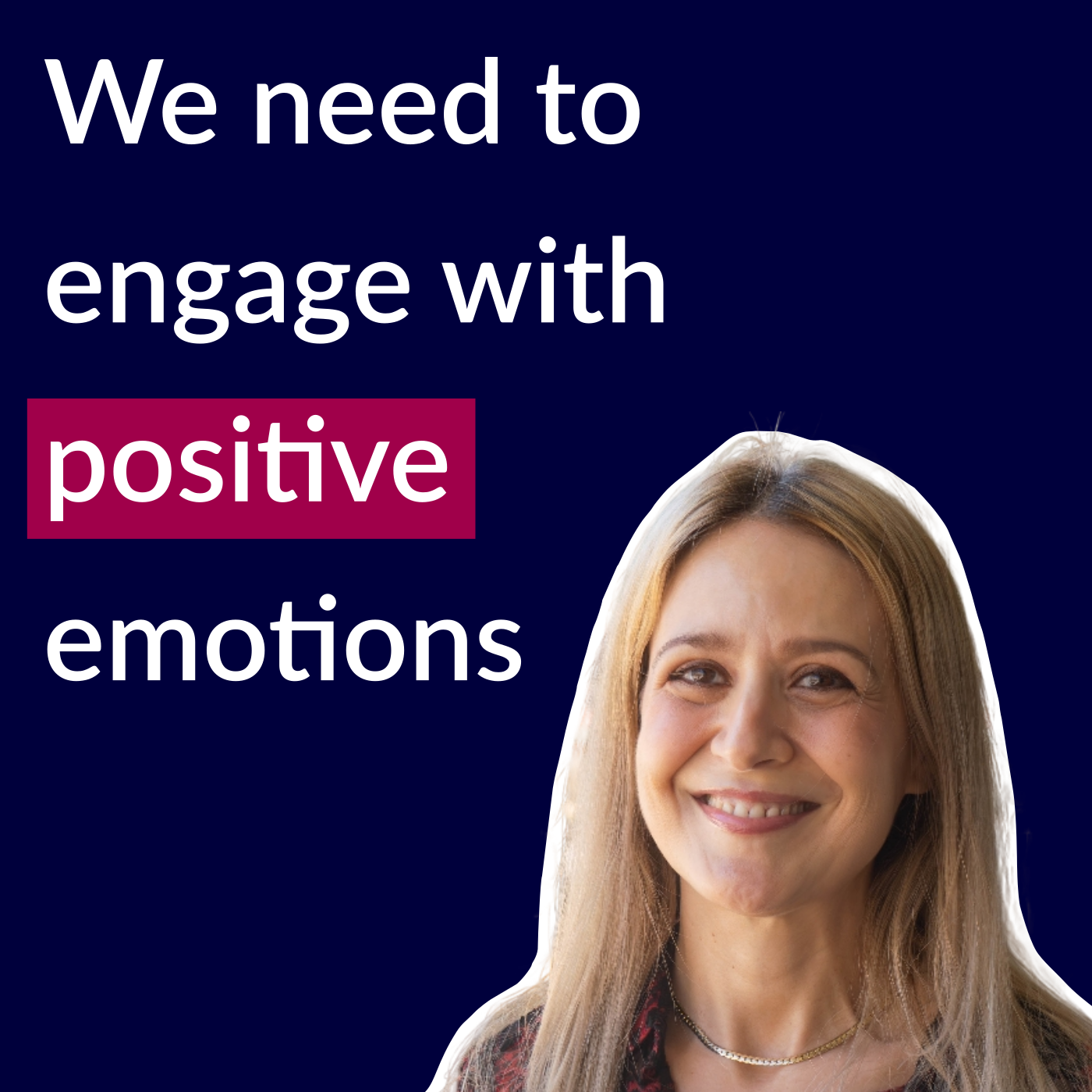
Sonia Bussu about using arts to bring emotions in democratic settings
Democracy Innovators | 2025-10-14 | 41:52
Sonia Bussu is an Associate Professor at the University of Birmingham. Her research focuses on participatory democracy and democratic innovations. In this episode, we explore the role of emotions in democratic engagement, the potential of civic technology, and how assemblage theory can help us to understand the fluidity and complexity of democracy.
If you enjoy our podcast, please consider making a donation. It really helps us to sustain the podcast.
Top Keywords
- assemblage 0.016
- young 0.009
- democratic 0.009
- democracy 0.009
- power 0.007
- assemblages 0.007
- emotions 0.006
- policy 0.006
- spaces 0.006
- work 0.006
- theater 0.005
- social 0.005
Transcript
Speaker 0
0:00 – 0:07
Welcome on another episode of Democracy Innovator podcast, and our guest of today is Sonia Busse. Thank you for your time, Sonia.
Speaker 1
0:08 – 0:12
Thank you for inviting me. I'm really looking forward to this conversation with you.
Speaker 0
0:13 – 0:34
And, you are a professor at the the University of Birkin Birmingham, and, you're a professor in public professor, as you say. In, in public policy. And so, as a first question, I would like to ask you, what are you researching? Like,
Speaker 1
0:36 – 3:03
Yeah. I'm, I'm interested in participatory democracy, and, I study democratic innovations. So, those, spaces of participation that allow citizens to have a say on on the policies that affect them. And, I also use, participatory research in in my work, in my empirical work. And so I try, to work with participants to cocreate policies, but also to evaluate the the process of the spear and the experience of participation with them. And recently, in my new project called Inspire, which is funded by the European Union Under Horizon Europe, we are also testing arts based and creative methods to strengthen inclusion, within these participatory spaces that, often tend to attract the most resourceful citizens, let's say. And the the groups whose voice and whose experiences are often at the margins of political, public, and social life are often often navigate many barriers even to access these new spaces of participation. And so we are trying to rethink participation from their perspective, co designing these spaces with them and using a number of different creative methods, that can perhaps help address some some barriers along, education, culture, language. So using arts to, also embody and, and, the experiences and bring emotions into democratic spaces. So that's what I'm working on at the moment specifically. But, generally, for the past fifteen years, I've been really focusing on participatory, democracy spaces of various kind. And I'm very also very interested in social movements and how social movements use these spaces to, advocate for a deeper, social change. Yeah. I think that gives you a sort of overview of what I'm doing right now. Absolutely.
Speaker 0
3:03 – 3:10
And, do you have an example about, the cocreation of policies or the also the codesign
Speaker 1
3:10 – 9:49
of, Yeah. So, I've just concluded, a participatory process, under the INSPIRE project in the West Midlands. So working with young people in in Birmingham. And, we focused on, youth employment policies. And we used something called legislative theater, And this comes from the the tradition of, the theater of the oppressed. So, we, recruited 15 young people, very young, between 14 and 17 years old, from, diverse communities and from across the West Midlands. So we we used our local networks of, youth groups and, something called the, young combined authority, which is an advisory body of young people to the West Midlands combined authority. So we recruited these 50 young people, and with the help of, a legislative theater, facilitators, these young people created a play through improvisations and games that reflects their their experience of trying to access equitable work experience, work placements, and getting the the support they need to develop their careers and enter the labor market. And, and so we, with legislative theater, you really focus a lot on power, right, and intersectional exclusions. And a lot of these young people, come from very diverse communities, and, they they might experience intersectional exclusions along race, gender, class. And so the, the the play is which is very much based on improvisation, reflect their experience. And then for the event, we invite, an audience of community members and, a team of policy makers, a team of people that have, in this case, influence on youth employment policies and that can help, address some of the problems that the play identifies. And the play, by the way, although it's about very serious issues, also very funny. It really mocks the system. And the the title is, you're fried, which is a a play on word on you're fired, and refers to the the the the the protagonist stands up for working for a a fast food, right, and, experiencing really, poor working conditions and low pay. And, and so what happens, after the the rep the presentation, the performance of the play, The the legislative facilitators, and I worked with two fantastic young people, that, I've been involved with me in another project and then trained to become facilitators themselves. But then, so what do they do? They invite the audience to identify problems and then step onto the stage in the scene to try and change the scenario. Right? And so members of the the audience, but also the policy makers in the room, effectively are entering the lives of these young people, right, and trying to change the scene to address the problem. And then there is a dialogue, right, between, the audience, the policy makers, the young people in trying to fine tune these changes. And this sort of, opens the way to a dialogue that ends up with an actual policy proposal. Actually, various policy proposals. And then the policy makers in the room have to, think, okay. How can I translate these proposals into tangible change? And they have to make some commitments in front of everyone. And then there is, a follow-up, right, where we bring together the young people and the policymakers. We look at what has been agreed on the night and, and then, a program of actions, right, is agreed, and then we follow-up with them. Now, obviously, policy making is very complex, and things don't always happen in a linear way. But it's like it this becomes like the the play, right, which is, very visual, brings in emotion, and then sort of foster generates these feelings of empathy, right, and solidarity in a more immediate way than just by reading a report or some numbers or just the exchange of rational arguments. Right? That can be very exclusive here. Through play, game, improvisation, theater, you're also challenging power dynamics between the young people and the policy makers. And it's the young people's and their experience that frames the whole debate and the whole deliberation. So that's the starting point. Right? And then this becomes a catalyzer of, ongoing dialogue ideally. So what we're trying to do is not to think about these projects as one event, but really anchor it in the local civil society and link it to live policy agendas so that you can, and and and and this is this has happened. So now we're finding synergies at different level at the municipal level, at the regional level to enact some of these proposals and groups of young people from the Young Combined Authority that I've just mentioned are also taking ownership, right, of what happens next, that the the young people that have been involved in the project, are also involved in the in the actions generating, yeah, new ways of, of working, and it all started with a play. And so yes. And and it inspire all the all the participatory processes are using things like, pictures or performance lectures and games and play, as, as a way of bringing in different groups, right, to to to look at specific policy issues. And so we're we're, yeah.
Speaker 0
9:50 – 10:07
I I can imagine, but maybe I'm wrong. I don't know that, in an event like the one that you described, there could be maybe less polarization, because sometimes often there is, I don't know, one is left, the other one is right, and so they do not talk each other. Well, maybe in such an event, it's different.
Speaker 1
10:07 – 13:58
I think it's a, it's a way of, imaging. Like, now we talk a lot about immigration. Right? And there is a lot of polarization about immigration. It'd be really like, bringing on stage the experience of, an immigrant, trying trying to, integrate in a in in a new country, and and and that experience frames the deliberations. So community members, irrespective of their background, they have to, in a way, relate to these different experiences. Like, seeing the world from from different, perspectives. Right? But in a in a more visual and way, it's really about, bringing in emotion and feelings and and, like, finding connections also through actual things of solidarity and empathy, right, that, are perhaps, disconnection is perhaps more difficult to, to develop if you're just reading numbers or if you're just living in a bubble online where you're not really understanding the experience of, of the groups that, for for different reason, you you might be antagonizing. Right? And so, yes, it's a it's a way of creating spaces of dialogue and connection, but not just using words. And, you know, there's there's a lot of talk about mini publics and citizen assemblies that are very much based on talk, and, exchange of rational arguments, and that work very well for for some groups, but not for all. And I think what we're trying to do with, bringing in the arts is really, just not thinking about rational exchanges, but also emotions and the the role that emotions play, in democratic setting, the importance of empathizing with different experiences of life and of the world. And and and, specifically, we want to really center the experience of those groups that are often, the ones not hurt for various reasons that are kept at the margins and they're often victimized. Right? And and through this process, the idea is that they also develop, a better sense of agency and collective agency. Right? And they will they so they you move from individual what might be perceived as individual weaknesses to actually, systemic oppressions and then building collective agency to address these oppressions. Right? So that's all, that's what the theater of the oppressed is is based on. I don't know if, you're familiar with the work with of Paulo Paulo Freire and the pedagogy of the oppressed. I really recommend if you have an encounter there, but it's really about, democracy as a, em emancipatory education. Right? And, and and so that's, that's the work we're doing. So centering experiences that are often marginalized and and using those experiences as catalyzer for dialogues, with the wider community to cocreate, policies that are, that can help us foster, social justice. I think that's the intent of the project.
Speaker 0
13:59 – 14:13
It's it's beautiful. I I like the I really like the approach. And, yeah, a lot of time, we forget about emotions. And, while we try to analyze the text, I don't know, logic, fallacies, and and so on. But there is
Speaker 1
14:14 – 15:01
emotions text. I mean, Yeah. And I think, like, perhaps one mistake of, liberal democracy is that, it's it can feel very techno, technocratic. Right? And I and I think that's also, ushered in, populistic reactions and pop populist, particularly far right populism, is very, good at, using emotions, although negative emotions, right, like fear. And so I think, we might need to engage more with emotion, but the positive emotions like hope and empathy and solidarities and all those, feelings that make us you that connect us as human beings. Right?
Speaker 0
15:03 – 15:16
How do you think, like, a social movement can use, I mean, I don't know if technologies or maybe other kind of governance to in a way that can that they can be heard?
Speaker 1
15:18 – 19:44
I think, social movements are already reclaiming a lot of these new democratic innovations. Right? And, there is there is also, like, in the digital world, there has been a social movement led reaction, to the commercial social media, social networks, right, and and, social media platforms with civic tech. Right? And so there is a lot of, exploration of how, we can use digital democracy also to support this, this work. And I I don't think that participation and democracy can only happen online. I think what I'm finding in my work that in person, like, physical connection is really important to create a sense of belonging. Right? And I think, because society are are increasingly atomized and and particularly young people have been living online all their lives. And, and and I think, like, having these spaces where we actually connect are incredibly important. Like, the the young people I work with, possibly, I I think recognize the importance of connection and feeling heard by their peers, as even greater than, seeing the policy change and having the policy makers, listening to them, which is also important. But it's, like, disconnections, this sense of belonging. That is, where they they really develop their democratic skills as well. Right? And, and I think, online, you can never fully create that. And so I use a lot Civic Tech, and I don't know if you are familiar, with the platform, the CDIM. Yes. So we use the CDIM for our work, to support the work that happens in person. And so for instance, the policy proposals that we co create through this theater, improvisation and sort of theater led dialogue Then added to the CDM as a policy in a policy tracker when we can track implementation of the commune of the of these proposals. And the idea is to make, the whole process, more visibly accountable because the whole community and the young people can check this policy tracker. And, each commitment is linked to specific organizations. So, the idea is that, things, don't get lost or or or don't get lost as easily as they could have they could otherwise. But it's very difficult, to create, critical mass in this, civic tech platforms. Right? Because no no matter how great they are in terms of, like, helping, more interactive participation of people, There's not many people there. And so, what's happening is that the public sphere, whether social movements or individual citizens, we're all in commercial platforms. And it's and it's very difficult to create, a a sort of a response to these commercial platforms where we have no control over the algorithms, right, and what we see and what we don't see. And there's such such little transparency about how these communities are formed, right, and engineered sometimes in this bubble created by algorithms. And and so that's problematic, and I think but then, like, it's very difficult to create a sort of publicly accountable platform that can build the same critical mass, right, as the virtual platform. I don't know what your experience is in this pattern. And if you use civic tech and you probably,
Speaker 0
19:45 – 19:52
yeah. I I saw that there is a, I mean, build a platform. Nowadays, it's quite easy
Speaker 1
19:53 – 20:05
having the people using the platform. Exactly. It's hard. And I think everyone is building their platforms, but then, like, we can't really, create a critical mass there that can Yeah. Make a difference. Right? And,
Speaker 0
20:07 – 20:41
maybe, like, instead of building everyone, his own or her own individual platform, collective effort to build the I don't know if the platform or, like, something that can really compete with, commercial such a network that, as you said, are sort of black box in terms of algorithms. And, yeah. And, also, I mean, the aim of such a network is to, to keep us sticked in front of the screen. Exactly.
Speaker 1
20:43 – 21:19
Exactly. And I think, like, I think, there is a a place for civic tech, and, technology, but I don't see democracy only happening there. Right? It's more like, supporting and and helping us continue the conversation, but there are I think we need to connect more, in person as, I think that's what I what I find. That's where the magic happens, you know, and the the the things develop through this new connections. Yeah.
Speaker 0
21:20 – 22:21
But do you mean just, like, in person or in person, like, with the help of some AI civic tech tool? Because I also when you were talking, I also believe that the in person is really, like, where you can feel emotions. Also, like, in a video call, you can feel more than than just chatting. Yeah. And, and I was thinking that maybe the future of civic tell civic tech tools should go in this direction. So where people interact with other people, but at the same time, there is, like, I don't know, a system, a software that can, help that people. I don't know maybe what, what is at the moment, What, could be like a normal political conversation between two people, then it also become like a sort of public conversation because, that data is extracted and contribute to something,
Speaker 1
22:21 – 24:12
because That's really interesting. Yeah. That's really interesting. Like, you'll have to to happen in a transparent way, though, because yeah. Yeah. And in in in through platforms that have some sort of public accountability because otherwise, of course, there is some room for manipulation of conversation or how they're edited or how they presented. Right? And, but, yes, definitely. I think there's a lot to explore, but the key is to, create, transparencies around these processes. And so even the role of AI, is very problematic right now, but simply because there is no democratic governance of AI, how it works, how it's developing. It's all in the eye in the in the hands of private companies. Right? Even the developmental models of AI, it's, it's beyond even the the the the reach of universities because they don't have they don't have the money to compete with the private sector, right, and attract the best brains or, or, even putting the money for the sort of computing power that is needed, right, for for AI to function and to develop. And so that is very problematic. So I think, all this technological development is fantastic and can support, democracy only if, there is also, a democratic governance of this technology and and accountability and transparency on how they're developing. And at the moment, we're so far away from that. I don't know if it's too late. But
Speaker 0
24:15 – 24:16
I hope not.
Speaker 1
24:17 – 24:17
Yeah.
Speaker 0
24:18 – 24:37
And, it makes me think I'll think that is a sort of circle because, to have new ways of governance, AI can be helpful, but at the same time, AI as it is now is a sort of black box. And so it's a it's a sort of Exactly. Exactly. The fact that,
Speaker 1
24:38 – 26:12
companies like OpenEye have got so much power over the development of our technologies that have a profound effects on all societies is so problematic. Right? And, and now I think, for instance, in The UK, there is an agreement between the UK government and OpenAI for AI to enter all public services. And, and, again, you know, what impact will they have on the way the police works or on the way, you know, local government works? Because we have such little understanding of how AI actually works. Right, and such little power on, on on controlling how it develops. And and and we know already that there are so many entrenched biases because these models are designed by a very, very narrow demographics of people, that enjoy certain intersectional privileges as well. So, yeah. So, yeah, it's very, very problematic. I think, yeah, it's gonna be interesting times ahead. But, but I suppose that's why it's more important than ever to create spaces for people to connect and develop critical thinking skills, you know, and and collective agency and democratic capabilities, which at the moment, as a society, we don't really have. Yeah.
Speaker 0
26:13 – 26:19
Yeah. You define, like, interesting times. Usually, it means, like, bad times. But
Speaker 1
26:21 – 26:30
The thing is I read a lot of sci fi, so I think I've got a a very dystopian, perspective on of things.
Speaker 0
26:30 – 26:59
Because that is the thing. Like, we we could actually have, like, a very, I would say just society. Like, in the future using this technology to maybe, I don't know, distribute power so that also, marginalized community can also have an impact. Or on the other side, we could also be, like, in a very dystopic world. I don't know everyone on TikTok are just not able to Exactly.
Speaker 1
27:00 – 29:04
It's the difference between the Star Trek world and the Black Mirror world. Right? So but we'll see. Once we we'll see where we we develop. But that Yeah. I mean, I think there's a lot of people working on positive innovations and democratic innovation. There's, there's some fantastic work that the commons do, and, and and and also the the civic tech commons as well. Right? But, but but there's there's still not the sort of critical mass. Right? We're still, they are very it's difficult to connect, and and perhaps, yeah, we should, try and connect his experiences more and create his spaces create create spaces for cross pollination and, and, yes. I mean, there have been some exciting experiences of, like, the municipalist, waves, right, and, the fearless city. I don't know if you've heard about them, but, these these are cities that, really invest a lot in participatory governance and create, connections between institution and social movements and prioritize social justice. And, Barcelona was the the sort of leading city of this network of so called fearless cities, but they're all over the world. But then it's very difficult to sustain these networks. And I think there's also very little awareness of, of what these different cities and experiences are actually doing. There's very little media attention. So, yeah, it's it's difficult to to sustain and keep the momentum on these alternative ways of understanding and governing societies. Right? But there's also a lot of work. So yeah.
Speaker 0
29:05 – 29:07
A lot a lot of work that can be done also.
Speaker 1
29:08 – 29:33
Exactly. And I I think, like, there's all these small autonomous zones of resistance. Right? And, finding ways of connecting them is gonna be more and more important, I think. Yeah. And I realized that, we you wanted to talk about assemblage. We haven't got that. Yeah. Exactly. I wanted to ask you if this, can,
Speaker 0
29:34 – 29:36
be connected in some way to your paper.
Speaker 1
29:37 – 34:56
I really think so because, assemblage gives us the, lens, right, to to look at democracy, in all its dynamism. And it's only fluid it's fluidity. And, it really refers, assemblage comes assemblage theory comes from the, right, to philosophers that in the nineteen eighties, published a thousand plateau, and, and they explore they basically, define assemblages as these dynamic configurations of people, institutions, technology, spaces, and including nonhuman and material entities like objects, animals, or even the weather. And so, all these elements come together to shape, processes, right, to create this dynamic for configurations that are called assemblage assemblages. And, and and and then if you I liked his lens to look at democracy, because he also gives an opportunity to, recognize its messiness and its fluidity. And so traditional views of democracy, as a system and, and often, just institutional arrangements, don't don't really, reflect that, that that the sort of fluidity and relational, relationality of democracy that is always in the making. Right? Always in a state of becoming. And, and and then, obviously, assemblages are not inherently democratic. They can also reproduce inequality. But what makes an assemblage democratic is its orientation towards freedom, equality, and inclusion, and its openness to transformation. And so I find it I find it useful the way, the talk talks about talk about power and, yes, and how that can, that can relate to the work, that to the work I do. And then and recently, I also we also I also co edited, an a special issue, on democratic assemblage with Hans Rosenbaum, where they're like, I really recommend it if you're interested in this lens because, there's some fascinating papers that also look at the at, at, a statue as a catalyzer for democratic encounters or even snow. Right? So, yeah, it's, it's it's quite interesting and, as it give, it broadens our understanding of, democratic practices. And and I I like, the way, power is also understood in assemblages as distributed agencies. So as emerging from the interaction among these different components, human and nonhuman, and for example, within a digital platform or within a public space. So yeah. I, there's there's I mean, there's a lot of terminology link linked to assemblage, but what it can help us really, reflect on is this, pull and push and pull dynamics because assemblages are shaped by tensions between, for instance, in democratic assemblages, grassroots activism and institutional control, between openness and closure, between empowerment and computation. And so I think, assemblage, an assemblage lens give gives us an an opportunity to zoom in and look at where there are spaces for change, right, through these, interactions. So I I think the the the sort of assemblage perspective is also what is in forming the way we're looking at the participatory processes, using codesign and cocreation that we are, yeah, we are implementing under the Inspire project. So we'll we'll I think, like, we're still testing whether, and how it works as an analytical lens, but also, as a, as a normative, normative theory of of democracy, particularly when it complements critical democracy. So I'm not sure how familiar you are, with critical democratic theory, but I think there's, a lot of, synergy with assemblage. It it aligns closely, like, that this emphasis on fluidity, contingency, relationality. So for instance, I don't know if you're familiar with the concept of fugitive democracy by Sheldon Pulling.
Speaker 0
34:57 – 34:58
Not fluid.
Speaker 1
34:58 – 38:01
So fugitive democracy describes democracy like real democracy as episodic, transient, emergent. Right? And so it arises at a moment of, in through moments of collective actions and resistance, but often outside formal institutions. But is it it is also precarious because it's constantly under threat from coopitation. And and so, And and so, this this this conceptualization of democracy really values pluralist, disruptions, and radical transformation. And these qualities really resonates with assemblage emphasis on what the called, deterritorialization. So the talk about territorialization deterritorialization and reterritorialization. Right? To understand, how change happens. Right? And so territorialization stabilizes an assemblage. So it will reinforce existing norms, existing hierarchies. Deterritorialization disrupts these norms and open space for change and democratic possibilities. And reterritorialization then occurs when innovations are absorbed back into the existing power structures. And and and so this potentially neutralizes the the transformative potential. Right? And and this push and pull dynamics are at play the whole time. And so the is metaphor. It is, heuristic of molar versus molecular desire, always intention. So the molar desire is like that kind of power that supports stability and control. So bureaucratic norms, for instance, or neoliberalism in terms of how we, we understand, the the the relationship between the economy and politics. And molecular desire is yeah. It actually drives creativity and disruption, and that often comes from grassroots movement or social movements. Right? And so this dynamics between molar and molecular shows that power in democratic assemblages is continuously contested and relational and emergent. So it it's never really static or centralized. And so that's why, I find it very useful as a lens to understand, you know, this relationship and to to really think about democratic innovations and how they relate to civil society and social movements, but also to, centers of decision making power in institutions. Yeah. I don't know if, that was overwhelming because it's a lot to take in with assemblage, and I'm still trying to navigate
Speaker 0
38:01 – 38:28
the the work of the lesson with Harry. But It's super interesting also the way how power can be conceived in different ways because I the lens we we use to conceive power, it's also changed how we use power. And, so power can be hierarchical, collective, or, like, in this case, also, including animals, plants, and so on. So it's, it's very Well,
Speaker 1
38:29 – 41:05
I I think, like, there's there's one thing, there's this, I I think one of the critiques, the big critiques, against assemblage theory is this idea of flat ontology. Right? So treating all entities as equally agentic. And this has been criticized because people say, well, you're you're obscuring power asymmetries by claiming this flat ontology. Because then you're saying that, the I don't know. Like, a tree will have the same power as a human being. But it's not what assemblers tries to do. And I think, we can highlight that better when we when we, combine assemblage with critical democratic theory. And and then you can reorient it towards normative goal like justice, equity, and ecological sensitivity. Because, actually, what what assemblage does is it challenges anthropocentrism. Right? Because by by recognizing non human any agency is is challenging the anthropocentric anthropocentric lens that we use to understand the world and to make it. Right? And he encourages response ability. Right? That's a concept that Donna Haraway introduced it. And this is the ethical responsiveness to others that we have. So we do have a responsibility, but not just towards other humans, also towards the nonhuman. And so that's, that's, yeah, that's that's the way, I think sometimes that latentology and the distributed power has been misunderstood in assemblage. But it's not about taking responsibilities away from humans because we do have responsibility by actually recognizing the agency of the nonhuman world. And and so making our, the way we even think about democracy and we we built democratic institution less anthropocentric. And I think anthropocentric has led to climate change, right, and a lot of other things that have used nature as a backdrop for all human actions, but, actually, this is not sustainable. Right? So
Speaker 0
41:07 – 41:13
It it made me think, I don't know if you have read it, the mushroom at the end of the word from Manat Singh.
Speaker 1
41:15 – 41:15
Yeah.
Speaker 0
41:16 – 41:30
Yeah. That's true. Yeah. Because the the the the mushroom matsutake that leaves in symbiosis with the pine. So Yeah. So I I will stay here for another hour talking about this, but
Speaker 1
41:30 – 41:47
I think you are number, podcast number two to continue the conversation. But, yes, but I think, yeah, it's been really lovely. Thank you for inviting me. And, yeah, always happy to to continue to explore these, these ideas.
Speaker 0
41:47 – 41:48
Thank you a lot, Sonia.
Speaker 1
41:49 – 41:49
Thank you.